Affiliate advertising disclosure. GreenArmorSystem (greenarmorsystem.it.com) is a participant in the Amazon Services LLC Associates Program, an affiliate advertising program designed to provide a means for sites to earn advertising fees by advertising and linking to Amazon.com. We earn an advertising fee on qualifying purchases made through the links on this page, and the reader's price is unaffected. Full disclosure
SITERWELL Smoke Detector Fire Alarms, 10 Year Battery Smoke Alarm Fire Detectors with Photoelectric Sensor & Low Battery: Set It and Forget It
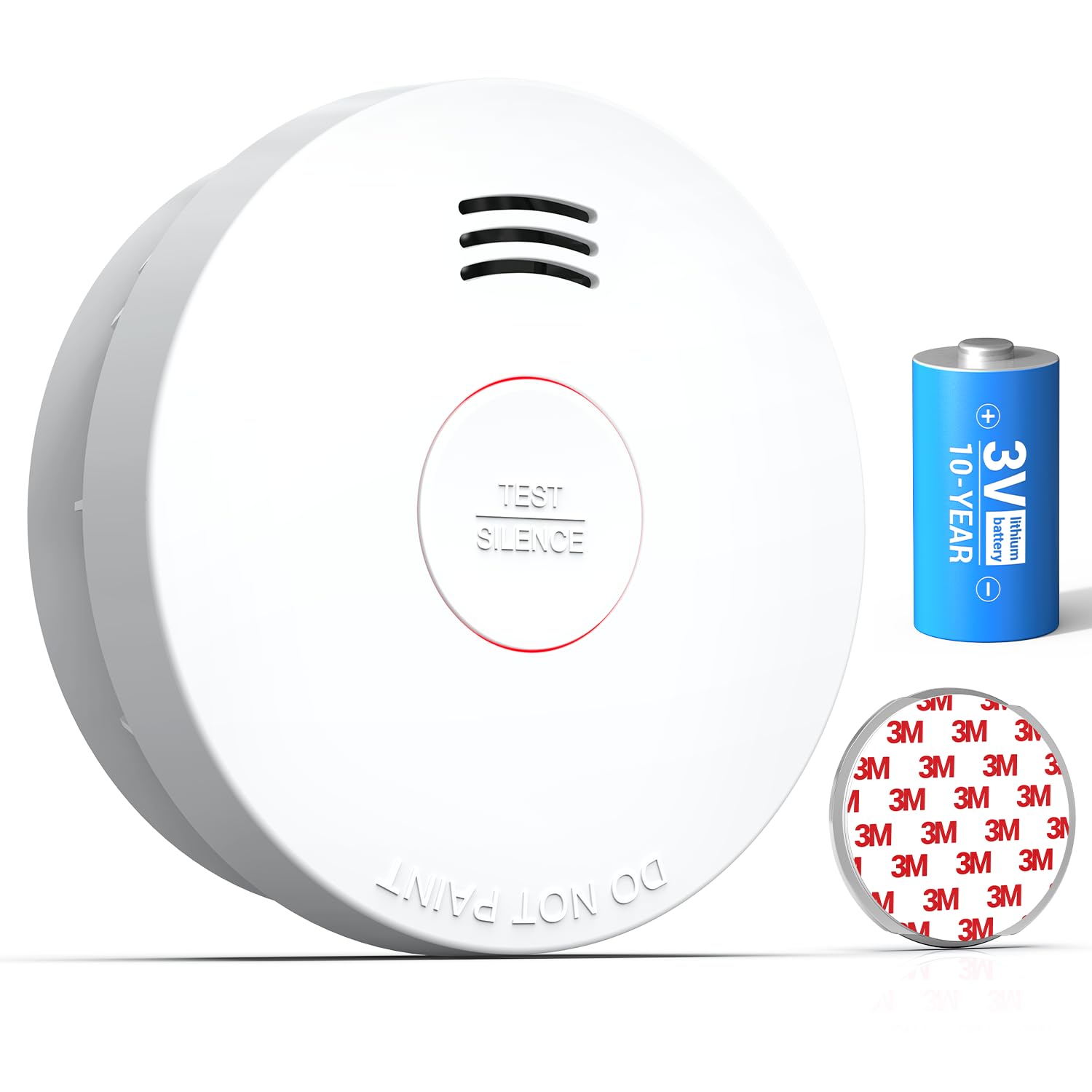
If you are shopping for a smoke alarm that does not become a monthly chore, the SITERWELL Smoke Detector Fire Alarms with a 10 year battery is built for you. This review covers the SITERWELL 10 Year Battery Smoke Alarm Fire Detectors with Photoelectric Sensor, a single-pack unit designed for bedrooms, hallways, and general house use. We will walk through its features, its limitations, and whether this set-and-forget approach fits your home before you hit that check price button.
The core promise here is simple: install it once and ignore it for a decade. Because the battery is sealed inside, there is no annual scramble to change a 9-volt at 2 a.m. when the chirping starts. We think this makes it an excellent choice for rental properties, vacation homes, or anyone who simply wants a safer home with less maintenance.
The short answer
Our pick for a hassle-free, long-term smoke detection solution is the SITERWELL Smoke Detector with 10 Year Battery. It suits homeowners and landlords who value reliability over gadgetry and who want an alarm that eliminates the most common point of failure in fire safety: the dead battery.
The trade-off is that you are committing to this specific unit for a full decade. You cannot swap in a fresh battery if you move and want to take the alarm with you; the sealed battery means the whole unit is replaced at the end of its life. For most buyers, that is a fair deal for the peace of mind, but it is worth knowing before you purchase.
Key features and specifications
This alarm keeps its feature set focused on the essentials rather than chasing smart-home integration. Here is what the product name and category tell us about how it is built and what it does.
| Specification | Detail |
|---|---|
| Product Type | Smoke Detector / Fire Alarm |
| Sensor Type | Photoelectric |
| Power Source | Sealed 10 Year Battery |
| Low Battery Warning | Yes (audible alert) |
| Fault Warning | Yes (audible alert for unit malfunction) |
| Intended Use | House, Bedroom, Hallway |
| Listing | UL217 Listed |
| Pack Size | 1 Pack |
The photoelectric sensor is the defining technical choice here. Photoelectric sensors are generally faster at detecting smoldering fires—the kind that produce lots of smoke before open flames appear, such as a couch catching fire from a dropped cigarette. This makes it a strong pick for general living areas and bedrooms where slow-burning fires are a greater risk than fast-flaming ones.
How the 10 year battery changes your routine
The single biggest decision you make with this alarm is accepting the sealed battery. For the next ten years, you will never hear a low-battery chirp and wonder if you have a 9-volt in the drawer. You will never balance on a chair at midnight trying to twist a battery out of a ceiling-mounted unit.
The trade-off is a matter of planning. Because the battery is not replaceable, the entire alarm becomes a disposable item at the end of its service life. You will need to note the install date on the unit and mark your calendar a decade out. If you are the type of person who loses track of time, we suggest writing the replacement month directly on the alarm with a permanent marker the day you install it.
Will the photoelectric sensor cover your needs?
Photoelectric sensors excel at detecting smoldering fires, which are the most common type of house fire. These fires produce heavy smoke and can burn for hours before bursting into flames, giving you and your family crucial extra minutes to evacuate.
However, if you want protection against fast-flaming fires—like a grease fire in the kitchen or a flammable liquid spill—this sensor type is not the fastest to respond. Many fire safety experts recommend a dual-sensor alarm (photoelectric plus ionization) for comprehensive coverage, or a combination of both types throughout the home. If this is your only alarm and you have a high-risk kitchen layout, consider pairing it with a heat alarm or a dual-sensor model in that specific area.
For bedrooms and hallways, which is exactly where SITERWELL markets this unit, the photoelectric sensor is well matched to the risk profile. Smoldering fires in furniture and bedding are precisely what you want early warning for while you sleep.
How the low battery and fault warnings work
The product name highlights both low battery and fault warnings, and these are the safety nets that make a sealed-battery unit trustworthy. When the battery begins to approach the end of its life, the alarm will emit a periodic chirp to tell you the unit needs replacing soon.
The fault warning is arguably the more important feature. This alarm performs internal self-checks and will alert you if the sensor itself fails or if the unit stops functioning properly for any reason. This means you are not blindly trusting a device that might have gone silent. A smoke alarm that does not beep when you press the test button is useless, and this unit’s fault warning reduces the chance that it fails silently.
We still recommend a monthly manual test by pressing the test button on the unit. No alarm is completely self-monitoring, and a quick monthly check takes seconds. The fault warning is a backup, not a replacement, for your own diligence.
What you get in the box and how installation feels
This is a 1-pack, so if you need to cover multiple rooms, you will need to order several units. The SITERWELL GS525A is designed for ceiling or high-wall mounting, which is standard for smoke alarms. You will need a drill and basic tools to mount the base plate, then twist the alarm onto the base.
Because the battery is sealed, there is no battery compartment to fiddle with during installation. The alarm typically comes with the battery already connected in a pull-tab configuration, so installation is essentially: mount the base, connect the unit, and press the test button. It is about as close to plug-and-play as a hardwired-looking device gets, minus the electrical work.
The case for buying multiple units
If you are reading this review, there is a good chance you are not just replacing one unit—you are upgrading your whole home’s fire safety. The 10 year battery makes this a tempting proposition for whole-home coverage because you can install several units and effectively forget about them for a decade.
That said, the cost adds up. At this price point, outfitting a three-bedroom home with the recommended number of alarms (one per level, one in each sleeping area, and one in hallways) means buying several single packs. If that pushes your budget, start with the bedrooms and hallway, as those are the highest priority for sleeping occupants.
Strengths and weaknesses
We have weighed the practical realities of this alarm against its price tier and category. Here is our honest assessment.
| Pros | Cons |
|---|---|
| The sealed 10 year battery removes the most common failure point in smoke alarms: dead or removed batteries. | The entire unit is disposable after 10 years; you cannot replace just the battery. |
| Photoelectric sensor is well suited to detecting smoldering fires common in bedrooms and living areas. | Photoelectric sensors are slower to react to fast-flaming fires than ionization or dual-sensor models. |
| Built-in fault warning helps catch internal failures you might otherwise miss between manual tests. | No smart-home connectivity or phone alerts, which some buyers now expect from a modern alarm. |
| UL217 listed, giving confidence in its compliance with recognized safety standards. | This is a 1-pack; full home coverage requires purchasing multiple units. |
The biggest caution we will offer is about the sealed battery in the context of your home’s future. If you plan to sell your home or move within the next few years, these alarms are not something you pack in a box. They are permanently affixed to your ceiling, and the remaining battery life is a selling point you leave behind for the next owner. Factor that into your purchase decision if you move frequently.
Questions buyers ask
How long does the battery actually last?
The SITERWELL alarm is designed with a sealed battery rated for 10 years of service. The unit is engineered to be replaced entirely at the end of that decade, not to have its battery swapped out.
What does the low battery warning sound like?
It emits a distinct, periodic chirp that differs from the full alarm sound. This chirp signals that the battery is nearing the end of its life and the unit should be replaced soon.
Is this alarm suitable for a kitchen?
Given its photoelectric sensor, it is better suited to bedrooms and hallways than kitchens. Cooking smoke can trigger false alarms, and the photoelectric sensor is not optimized for detecting fast-flaming grease fires. Consider a heat alarm for kitchen use.
Can I connect multiple SITERWELL alarms together?
This specific model is a standalone unit. It does not support interconnectivity, meaning if one alarm sounds, the others will not automatically trigger. For interconnected coverage, you would need a different, typically hardwired or wireless-interlinked system.
What does the fault warning mean?
The fault warning indicates that the unit has detected an internal problem, such as a sensor failure. If you hear this warning, the alarm is telling you it can no longer guarantee proper function and should be replaced immediately.
How do I install this smoke detector?
You mount the included base plate to the ceiling or high on a wall using screws (you will need a drill). Then you attach the alarm body to the base and twist to lock it in place. Finally, press the test button to confirm it works.
Does this alarm work during a power outage?
Yes. Because it runs entirely on its sealed battery, it does not rely on household electrical power. It will continue to function normally during power outages.
Why does my smoke alarm chirp even after I install it?
If you hear chirping shortly after installation, press the test button to ensure the unit is seated correctly on the base. Persistent chirping could indicate a fault, which the unit’s warning system is designed to communicate.
Is this alarm UL listed?
Yes, the product name confirms it is UL217 Listed, which means it meets recognized safety standards for smoke alarms in the United States.
How often should I test this alarm?
We recommend testing at least once a month by pressing the test button and holding it until you hear the alarm sound. This confirms the speaker, sensor, and battery are all functioning.
What is the difference between photoelectric and ionization sensors?
Photoelectric sensors respond faster to smoldering fires with lots of smoke. Ionization sensors respond faster to fast-flaming fires with less visible smoke. This SITERWELL model uses photoelectric technology.
Can I take this alarm with me if I move?
You can remove it from the ceiling and take it with you, but the 10 year battery clock does not pause. The unit’s lifespan is measured from its first activation, so moving it does not extend its service life.
Our final take on the SITERWELL smoke detector
The SITERWELL Smoke Detector Fire Alarms with 10 Year Battery is a straightforward answer to a common problem: smoke alarms fail because people forget to change batteries. By sealing a 10 year power source inside the unit, SITERWELL removes that excuse and that risk.
It is not the most feature-packed alarm on the market—there is no app, no voice alerts, and no interconnectivity—but it does not pretend to be. It is a reliable, UL217-listed, photoelectric smoke alarm that suits the bedrooms and hallways of most homes. If you value a decade of peace of mind over a handful of smart features, this is a solid pick. Check the current price on Amazon to see if it fits your budget for outfitting your home.