Affiliate advertising disclosure. GreenArmorSystem (greenarmorsystem.it.com) is a participant in the Amazon Services LLC Associates Program, an affiliate advertising program designed to provide a means for sites to earn advertising fees by advertising and linking to Amazon.com. We earn an advertising fee on qualifying purchases made through the links on this page, and the reader's price is unaffected. Full disclosure
Best Alarm Testing and Maintenance Schedule Logs for Landlords, Facilities Teams and Safety Officers
A written alarm testing and maintenance schedule is only as good as the record you keep of it, and that record is what an inspector, insurer or auditor will ask for first. We picked five log books and reference guides that cover the whole range of buyers: a landlord with a handful of smoke alarms, a facilities manager running a full fire panel, and an electrician or safety officer who needs a technical field reference rather than a blank form. Every pick below is a paper record you fill in by hand, so the choice comes down to scope, layout and how much guidance you want on the page. Read the short answer first, then skim the reviews for the one that matches your building.
The short answer
Our top pick for most buyers is THE FIRE ALARM INSPECTOR’S HANDBOOK because it explains what to test and why, not just where to sign. If you already know your schedule and simply need a tidy place to log it, the cheaper log books do the same job for less money.
The split matters. A log book is a compliance artifact: it proves the work happened. A handbook is a working tool that helps you build the schedule in the first place. Buyers who are new to alarm maintenance usually want both, and the pair costs less than a single call-out from a contractor.
Overview of the picks
We chose one reference guide and four record books so the list covers different premises and different budgets. The Fire Alarm Testing Log Book is the broadest all-purpose form book and suits landlords, schools and small offices that need one place for every test. The Fire Alarm Inspector’s Handbook is the technical pick for anyone who has to understand the system, not just tick boxes. The budget Fire Alarm Log Book keeps costs down for a single small premises. The Fire Alarm Log Book: Record Inspections, Tests & Maintenance sits in the middle with a straightforward inspection-first layout. The Smoke Alarm Test Log Book narrows the focus to domestic smoke alarms, which is exactly what a residential landlord needs.
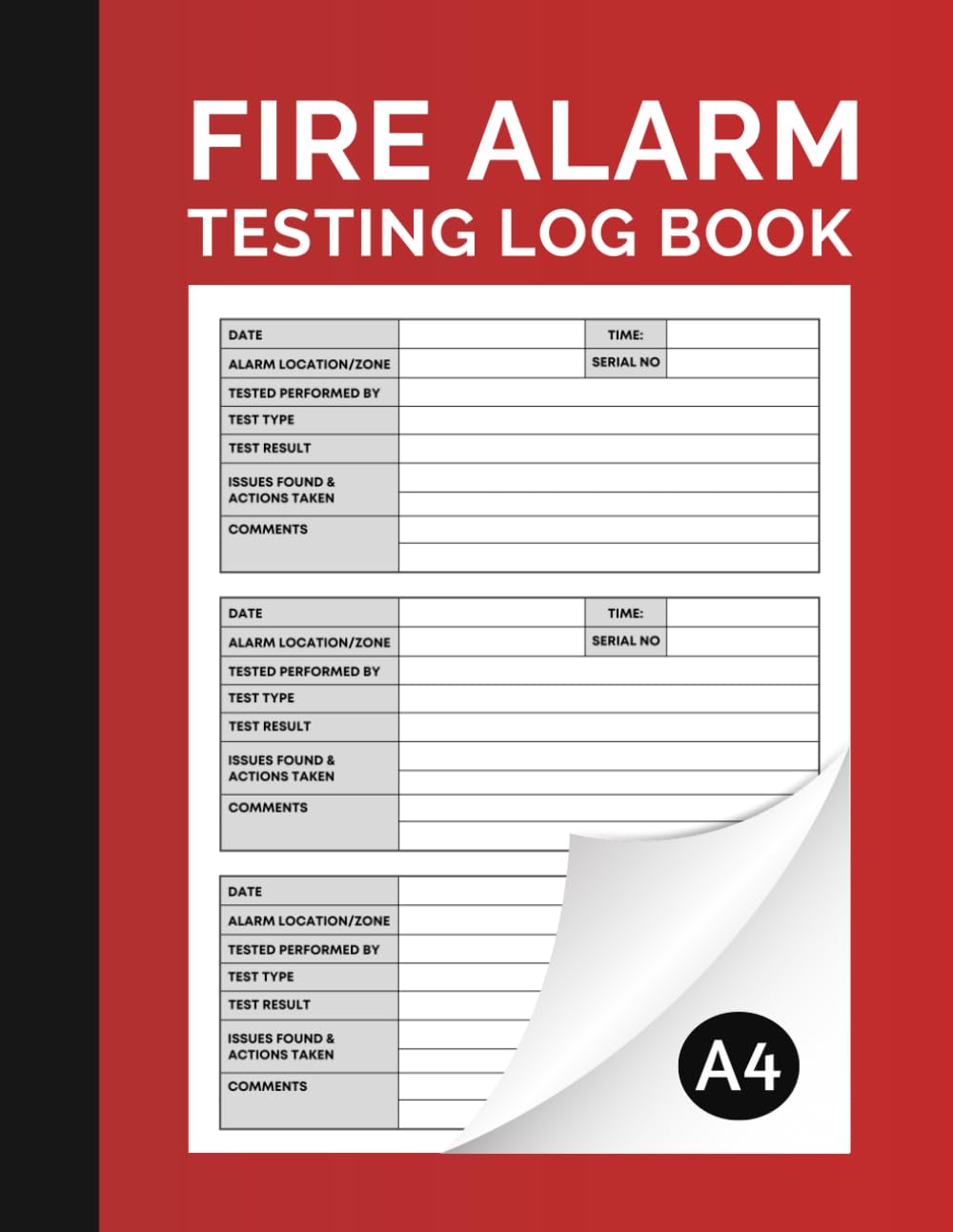
Fire Alarm Testing Log Book: Fire Alarm Testing and Maintenance Log For Landlords, Businesses, Schools, Offices, Workplace And More
Check the current price on Amazon
This is the catch-all book of the group, and its title spells out the audience: landlords, businesses, schools, offices and workplaces. It is a paper log with printed forms for weekly tests, periodic maintenance and the sign-off columns an inspector expects to see, so it works as a single register for a mixed portfolio. The binding and page count are the usual paperback format for this category, which means it lies open on a desk well enough but will not survive years of being thrown in a van. For a site manager who wants one book that covers every alarm type on the premises, this is the most flexible option here.
We rate it first among the record books because the scope is wide without being vague, and the same book serves a small office block and a primary school. The caution is that a broad form set can feel generic: if your system has unusual zones or a specific panel layout, you will be adapting the columns to fit rather than finding a form designed for it. Buyers who need technical depth should look at the handbook instead.
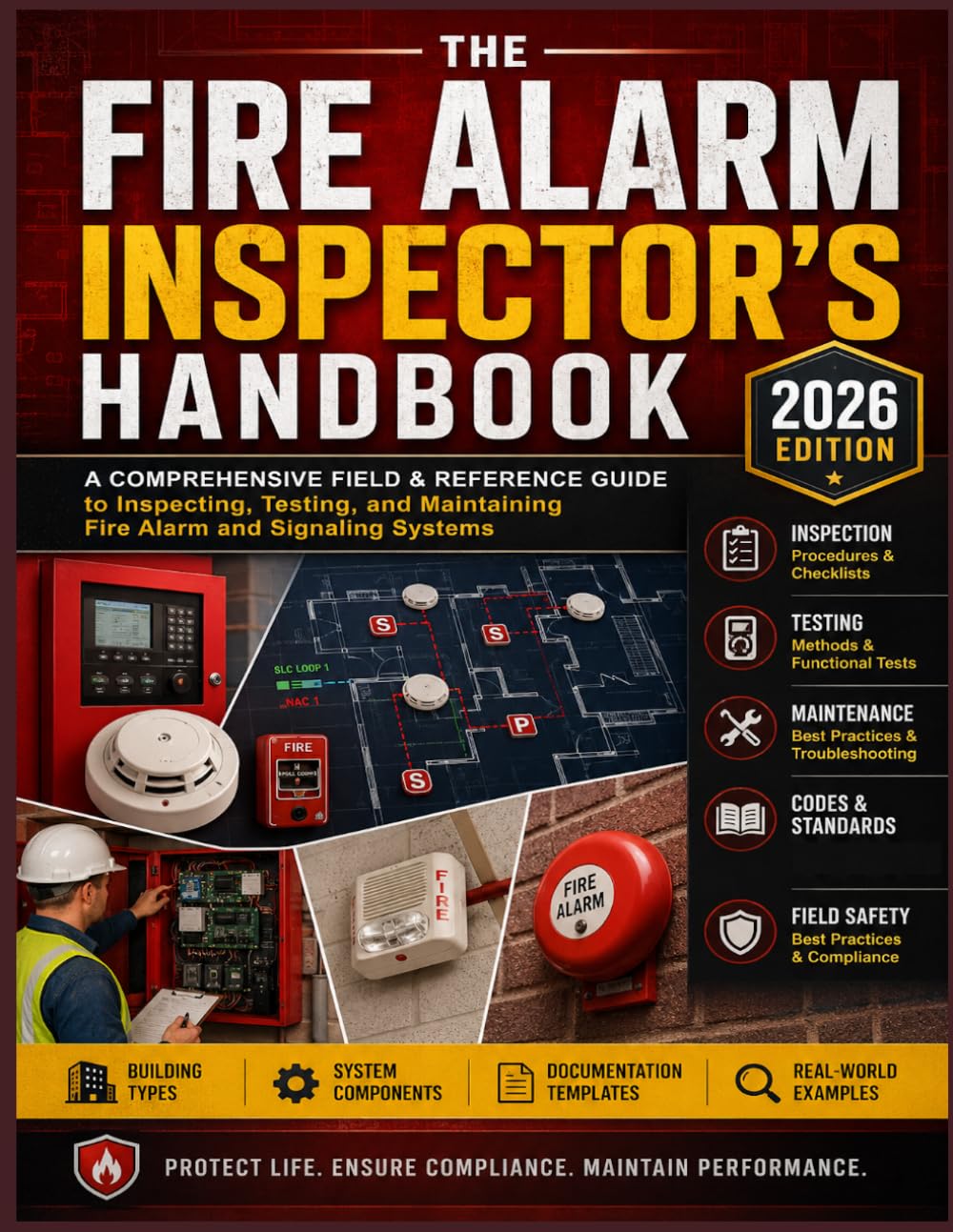
THE FIRE ALARM INSPECTOR’S HANDBOOK: A Comprehensive Field & Reference Guide to Inspecting, Testing, and Maintaining Fire Alarm and Signaling Systems
Check the current price on Amazon
This is the only pick that is a reference book rather than a blank register, and it is the one we would hand to a new safety officer or an electrician moving into alarm work. It covers inspection, testing and maintenance of fire alarm and signaling systems as a field guide, so it explains the sequence of a test, what a result means and how to keep a system in working order between visits. Because it is written as a field and reference guide, it is meant to be carried and consulted on site rather than read once and shelved. It pairs naturally with any of the log books on this list: the handbook tells you what to do, the log proves you did it.
It earns its place as our top pick because understanding the schedule is the part most people get wrong, and a book that teaches the reasoning is worth more than another set of blank rows. The caution is price and depth: it costs more than the log books and assumes you are comfortable with technical language, so a residential landlord with two smoke alarms will find it heavier than the job requires. Facilities teams and tradespeople will get far more out of it.
Fire Alarm Log Book: Fire Alarm Panel Log, Fire Alarm Test LogBook, Fire Alarm Safety Register, Fire Alarm Maintenance Log Book, Fire Prevention Log Book

Check the current price on Amazon
This is the budget pick, and it is deliberately simple: a panel log, a test log, a safety register and a maintenance record rolled into one inexpensive paperback. The name suggests sections for each of those jobs, which suits a single small premises where one person handles the testing and the paperwork. At this price it is the easy choice for a corner shop, a small workshop or a landlord who wants a compliant record without spending much. The format is basic, so expect plain tables rather than guided prompts or explanatory notes.
We included it because not everyone needs a thick book, and a cheap log that actually gets filled in beats an expensive one that stays in a drawer. The drawback is durability and depth: at the budget end, the cover and paper are lighter, and the forms assume you already know what to write in each column. Buyers who want guidance on the schedule itself should pair it with the handbook or step up to the broader testing log.
Fire Alarm Log Book: Record Inspections, Tests & Maintenance

Fire Alarm Log Book: Record Inspections, Tests & Maintenance
Check the current price on Amazon
This one keeps things plain in the best sense: the title names the three things you record — inspections, tests and maintenance — and the layout follows that order. It is a mid-priced paperback aimed at whoever is responsible for keeping a building’s alarm records current, with dedicated space for each type of entry so an inspector can find the right section quickly. There is no reference material inside, just structured forms, which makes it fast to use once your schedule is set. For a facilities team that already has a procedure and needs a clean audit trail, it is a sensible middle option.
It earned its place because the inspection-first structure matches how most compliance visits actually run, and the price sits comfortably between the budget book and the handbook. The caution is that it is a record book and nothing more: it will not help you decide test frequencies or interpret a failed check, and the plain tables leave little room for long notes. Buyers who want prompts and guidance should look elsewhere.
Smoke Alarm Test Log Book: Complete Maintenance, Testing & Inspection Record for Landlords, Property Managers & Facilities Teams

Check the current price on Amazon
This is the specialist of the group, narrowed to smoke alarms rather than full fire alarm panels. Its title targets landlords, property managers and facilities teams, and it is built as a complete maintenance, testing and inspection record for domestic and small-scale alarm units. For a residential landlord with several properties, that focus is useful: the forms match the job you actually do, testing and cleaning individual alarms rather than logging zone tests on a commercial panel. It is a paperback in the same general format as the others, so it travels well between properties.
We rate it the best fit for anyone whose responsibility is smoke alarms specifically, because a dedicated book avoids pages of panel fields you will never fill in. The caution is the flip side of that focus: if a building also has a conventional fire alarm panel, this book will not cover it and you will need a second register. Buyers managing mixed premises should choose the broader testing log instead.
Buying Guide
- Scope: Match the book to the systems you actually maintain. A smoke-alarm-only property needs a smoke alarm log; a building with a panel needs a fire alarm register with zone and panel fields.
- Guidance versus forms: A reference handbook explains test sequences and maintenance intervals, while a log book only records them. New safety officers usually need both, and buying them together costs little.
- Layout: Look for dedicated sections for inspections, tests and maintenance so an inspector can find entries quickly. Mixed-purpose books are convenient but can bury the section you need.
- Durability: Paperbacks are fine for a desk drawer but wear quickly in a van or on site. If the book travels, consider a folder or cover to keep it intact.
- Sign-off space: A usable schedule needs room for the date, the test carried out, the result and a signature. Check that the columns give you space for all four before you commit.
- Premises count: A single-site buyer can use a slim budget book, while a landlord or facilities team covering several buildings should pick a book with enough entries to last a full cycle.
- Currency of guidance: Reference books age as standards change. If you rely on a handbook for procedure, check that it reflects current practice before you build your schedule around it.
Frequently Asked Questions
How often should alarms be tested and logged?
Weekly testing is the usual routine for a monitored fire alarm system, with periodic maintenance at longer intervals, while domestic smoke alarms are typically checked monthly. Record every test in your log as you do it, because a gap in the record is what an inspector notices first.
Do I need a separate log book for each building?
Yes, in practice. Keeping one book per premises makes the audit trail clear and stops entries from different sites getting mixed together. Landlords with several properties often buy a book per address.
Is a handbook necessary if I already have a log book?
Not strictly, but it helps. The log proves the work happened; the handbook tells you what the correct test and maintenance schedule should be. Buyers new to alarm maintenance get the most value from owning both.
Can I use a fire alarm log for smoke alarms only?
You can, but a dedicated smoke alarm log is cleaner. Panel-oriented books carry fields for zones and signalling that a single domestic alarm does not have, which wastes space and can confuse the record.
What should each log entry include?
At minimum, the date, the device or zone tested, the type of test, the result and the signature of the person who did it. Add any remedial action taken so the next person knows what was already addressed.
How long should I keep completed log books?
Keep them for as long as your insurer, regulator or contract requires, and in practice for the life of the system plus a margin. Store completed books somewhere dry and retrievable rather than discarding them once full.