Affiliate advertising disclosure. GreenArmorSystem (greenarmorsystem.it.com) is a participant in the Amazon Services LLC Associates Program, an affiliate advertising program designed to provide a means for sites to earn advertising fees by advertising and linking to Amazon.com. We earn an advertising fee on qualifying purchases made through the links on this page, and the reader's price is unaffected. Full disclosure
Best CO Alarm Placement Near a Boiler for Fast, Reliable Protection
Carbon monoxide is the silent risk hiding next to your boiler. The right detector needs to sit close enough to catch a leak early, yet far enough to avoid false alarms from the appliance’s normal operation. We have compared five solid options, from a budget-friendly battery unit to a rugged industrial monitor, so you can secure your utility room without overthinking the setup. Read on for our top picks and a quick guide on where to mount each one.
We looked at what each alarm offers in terms of power source, portability, and display features, because placement rules shift depending on whether you need a fixed unit or something you can move from a rental to a workshop. Our top choice for most homes is the Kidde Carbon Monoxide Detector, AA Battery Powered, Portable for Travel or Home, 85 dB Alarm, LED Status Indicators, 3rd Edition, which offers the flexibility to test different spots before you commit to a permanent mount.
The short answer
For a boiler install, we recommend the First Alert 10-Year Battery Carbon Monoxide Alarm with Digital Display | CO710. Its sealed battery means you never have to swap cells while reaching over a hot pipe, and the digital display gives you a clear readout of current CO levels, which is invaluable when you are troubleshooting a potential leak. Place it at least five feet off the floor and within ten feet of the boiler room door, but not directly above the unit where steam or heat could trigger nuisance alarms.
Overview of our picks
Here is a quick snapshot of the five alarms we evaluated for placement near a boiler:
- Kidde Carbon Monoxide Detector, AA Battery Powered, Portable for Travel or Home, 85 dB Alarm, LED Status Indicators, 3rd Edition — our flexible pick for renters and testing different locations.
- First Alert Battery Carbon Monoxide Alarm | CO400 — the budget-friendly staple for basic protection.
- Kidde Carbon Monoxide Detector, AA Battery Powered CO Alarm with LEDs, Test-Reset Button, Low Battery Indicator, Portable — a solid mid-range choice with handy controls.
- First Alert 10-Year Battery Carbon Monoxide Alarm with Digital Display | CO710 — our top pick for permanent boiler rooms.
- Inspector CO Monitor | CE Certified Portable Gas Monitor | Industrial and Scientific | IP67 | Standard Model — the premium choice for workshops, garages, or semi-commercial spaces.
Kidde Carbon Monoxide Detector, AA Battery Powered, Portable for Travel or Home, 85 dB Alarm, LED Status Indicators, 3rd Edition

This Kidde model is built around the idea that carbon monoxide protection should follow you wherever you go. The AA battery power source means you can set it on a shelf near your boiler, pack it for a hotel stay, or clip it into an RV without worrying about a hardwired installation. The 85 dB alarm is loud enough to hear from a bedroom down the hall, and the LED status indicators give you a quick visual check that the unit is functioning. We see this as the right pick for renters who cannot drill into walls or for anyone who wants to verify the best location before permanently mounting a second unit.
The portability is the standout feature here, but it also points to the main caution. Because it is designed to be moved, it is less likely to have the robust wall-mounting hardware of a dedicated fixed unit. You will want to ensure it sits on a stable, level surface near the boiler, out of reach of children and pets. It also lacks the digital display found on pricier models, so you will not get a numerical reading of gas levels, only the alarm and lights. For someone who needs a flexible first defense, this is a smart buy.
First Alert Battery Carbon Monoxide Alarm | CO400

The First Alert CO400 is the no-frills workhorse of carbon monoxide detection. It covers the basics: battery power, a loud alarm, and a compact body that mounts easily on a wall or sits on a shelf near your boiler. This is the unit we recommend for homeowners who want reliable protection without spending extra on features they may never use. It is a straightforward install, and the battery operation means you can place it anywhere within reach of the appliance.
That simplicity carries one trade-off. You do not get a digital display or any advanced diagnostics, so troubleshooting a slow leak is harder because the alarm only tells you when the level is dangerous, not what the current reading is. It also lacks the portable design of the Kidde model above, so moving it between rooms is less convenient. For a fixed installation in a basement utility closet, however, the CO400 is a dependable, budget-conscious choice that gets the job done.
Kidde Carbon Monoxide Detector, AA Battery Powered CO Alarm with LEDs, Test-Reset Button, Low Battery Indicator, Portable

This second Kidde model improves on the entry-level formula with a few quality-of-life features that matter when you are working near a boiler. The test-reset button lets you silence a false alarm quickly and verify the unit is working without waiting for the weekly self-check. The low battery indicator is a practical touch, because a detector that dies silently is no detector at all. LED lights provide a clear status at a glance, which is useful in a dim utility room.
The added controls make this slightly more expensive than the basic CO400, but the convenience is worth it for many users. The main drawback is that, like the other portable Kidde unit, it is not designed for harsh environments. If your boiler room is dusty or subject to temperature swings, the internal sensor may be prone to nuisance alerts. It is best suited for clean, dry indoor spaces where you want a dependable alarm with easy access to test and reset functions.
First Alert 10-Year Battery Carbon Monoxide Alarm with Digital Display | CO710

The CO710 is the most homeowner-friendly option on our list, thanks to the sealed 10-year battery and the built-in digital display. You never have to change the battery, which is a huge advantage when the alarm is mounted high on a wall near a boiler where reaching a battery compartment is awkward. The display shows real-time carbon monoxide levels in parts per million, so you can see a slow leak developing before it becomes a full-blown emergency. That visibility alone makes it our top pick for permanent installations.
The digital readout is also the source of its minor drawback. Because it is constantly checking and displaying levels, the unit draws more power than a simple alarm, and the sealed battery means the whole device must be replaced after its service life ends. It is also the priciest of the residential models here. Still, for a boiler room where you want peace of mind and minimal maintenance, the CO710 justifies its cost through convenience and clear information.
Inspector CO Monitor | CE Certified Portable Gas Monitor | Industrial and Scientific | IP67 | Standard Model
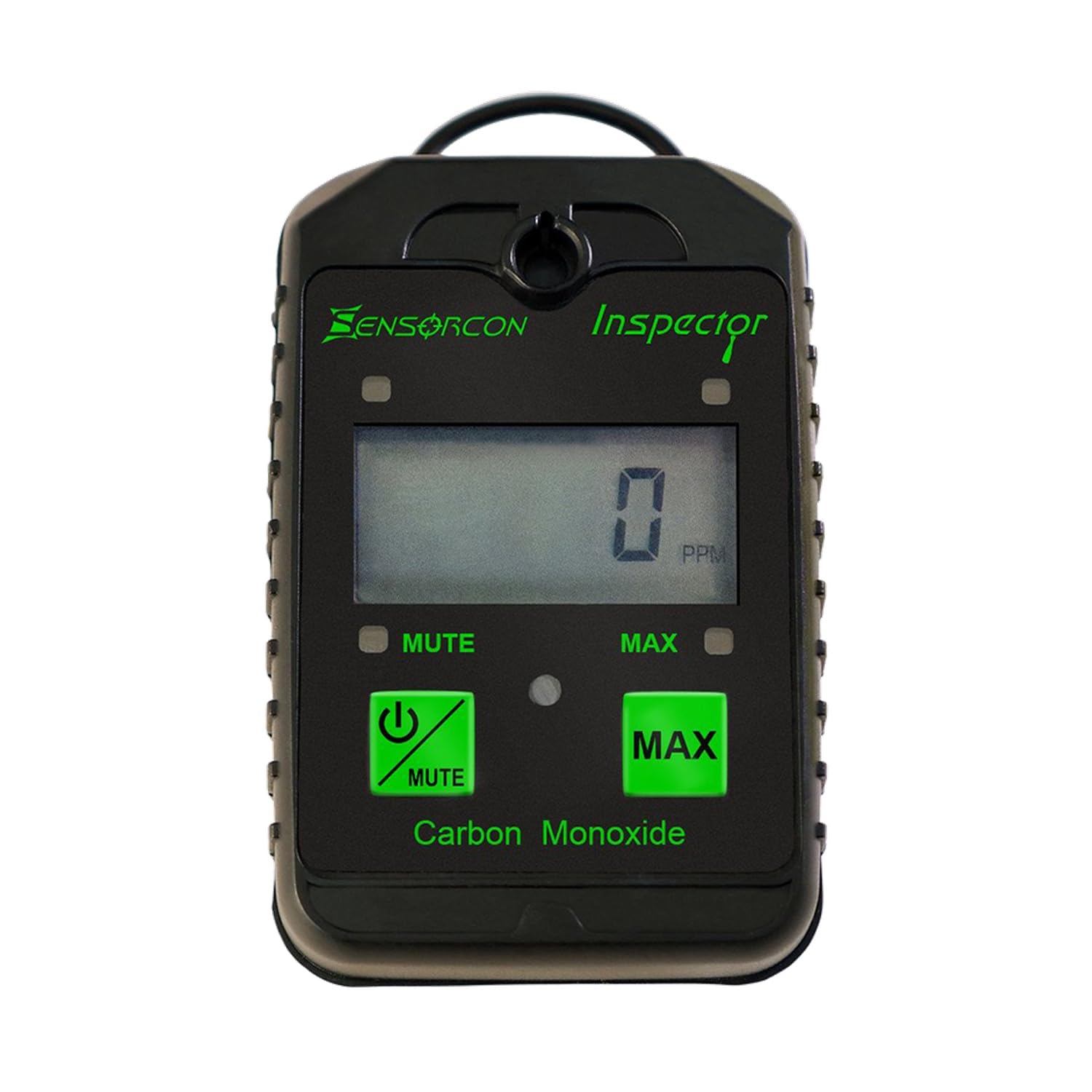
The Inspector CO Monitor steps well beyond the residential category into industrial and scientific territory. Its IP67 rating means it is dust-tight and can survive immersion in water, making it a rugged choice for a garage, workshop, or semi-commercial boiler room where moisture and debris are a concern. The CE certification points to a device built to a higher standard, and the portable design lets you carry it from one piece of equipment to another for spot checks. This is a tool for someone who treats carbon monoxide detection as a serious part of their workflow.
The price reflects that professional positioning. At roughly seven times the cost of a basic residential alarm, the Inspector is overkill for a typical home boiler installation. It also lacks the long-term battery life of the CO710, so you will need to manage its power source more actively. If you run a small business, maintain multiple appliances, or simply want the most durable monitor available, this is the one to choose. For a standard household, we would steer you to the First Alert CO710 instead.
Buying guide
- Power source: Battery-powered units offer flexible placement without an electrician. Sealed 10-year batteries reduce maintenance but require full replacement at end of life.
- Display type: A digital readout shows current CO levels, which helps detect slow leaks. Basic alarms only sound when the danger threshold is reached.
- Portability: If you need one detector for multiple locations, choose a compact model that sits on a shelf. Fixed units are better for dedicated boiler rooms.
- Mounting hardware: Check whether the alarm includes wall anchors or is designed to sit flat. Boiler rooms often have masonry walls that need special fasteners.
- Environmental resistance: An IP67-rated monitor is essential in dusty or wet spaces. Standard residential alarms are not built for harsh conditions.
- Alarm loudness: An 85 dB alarm is typical for residential use and should be audible from adjacent rooms. Ensure your placement allows the sound to travel.
- Sensor longevity: All CO sensors degrade over time. Follow the manufacturer’s replacement schedule and test the unit monthly.
Frequently Asked Questions
How far should a CO alarm be from a boiler?
Place the alarm within 10 to 15 feet of the boiler room, but not directly above the unit. Heat and steam from the appliance can cause false alarms, so mount it on a wall or shelf away from the direct flow of exhaust.
Should a CO alarm be high or low on the wall?
Carbon monoxide mixes with air rather than rising or sinking like natural gas. The recommended placement is at breathing height, roughly five feet off the floor, where the sensor can sample the air you are actually inhaling.
Can I use one CO alarm for multiple appliances?
One alarm can cover a room, but for a large home with a boiler in the basement and a gas stove upstairs, you should install separate units on each level. Follow local building codes for the exact number required.
Why does my CO alarm go off when the boiler is running?
This usually indicates a sensor issue or a real leak. Check the alarm’s age, move it slightly farther from the boiler to rule out heat interference, and if it continues, call a professional to inspect the appliance.
How often should I replace a CO alarm?
Residential CO alarms generally need replacement every five to seven years, and the unit will often beep to signal the end of its life. The First Alert CO710 with a 10-year battery should be replaced after its stated service period.
Our final call
For most homeowners, the First Alert 10-Year Battery Carbon Monoxide Alarm with Digital Display | CO710 is the best balance of safety, convenience, and information for placement near a boiler. The sealed battery removes the biggest maintenance headache, and the digital display gives you early warning of a slow leak. If you need a portable option for testing locations or protecting multiple spaces, the Kidde Carbon Monoxide Detector, AA Battery Powered, Portable for Travel or Home is our recommended backup. Either way, make sure your alarm is mounted away from direct heat and tested monthly.