Affiliate advertising disclosure. GreenArmorSystem (greenarmorsystem.it.com) is a participant in the Amazon Services LLC Associates Program, an affiliate advertising program designed to provide a means for sites to earn advertising fees by advertising and linking to Amazon.com. We earn an advertising fee on qualifying purchases made through the links on this page, and the reader's price is unaffected. Full disclosure
First Alert SMI100-AC Hardwire Smoke Alarm: Reliable Protection That Speaks for Itself
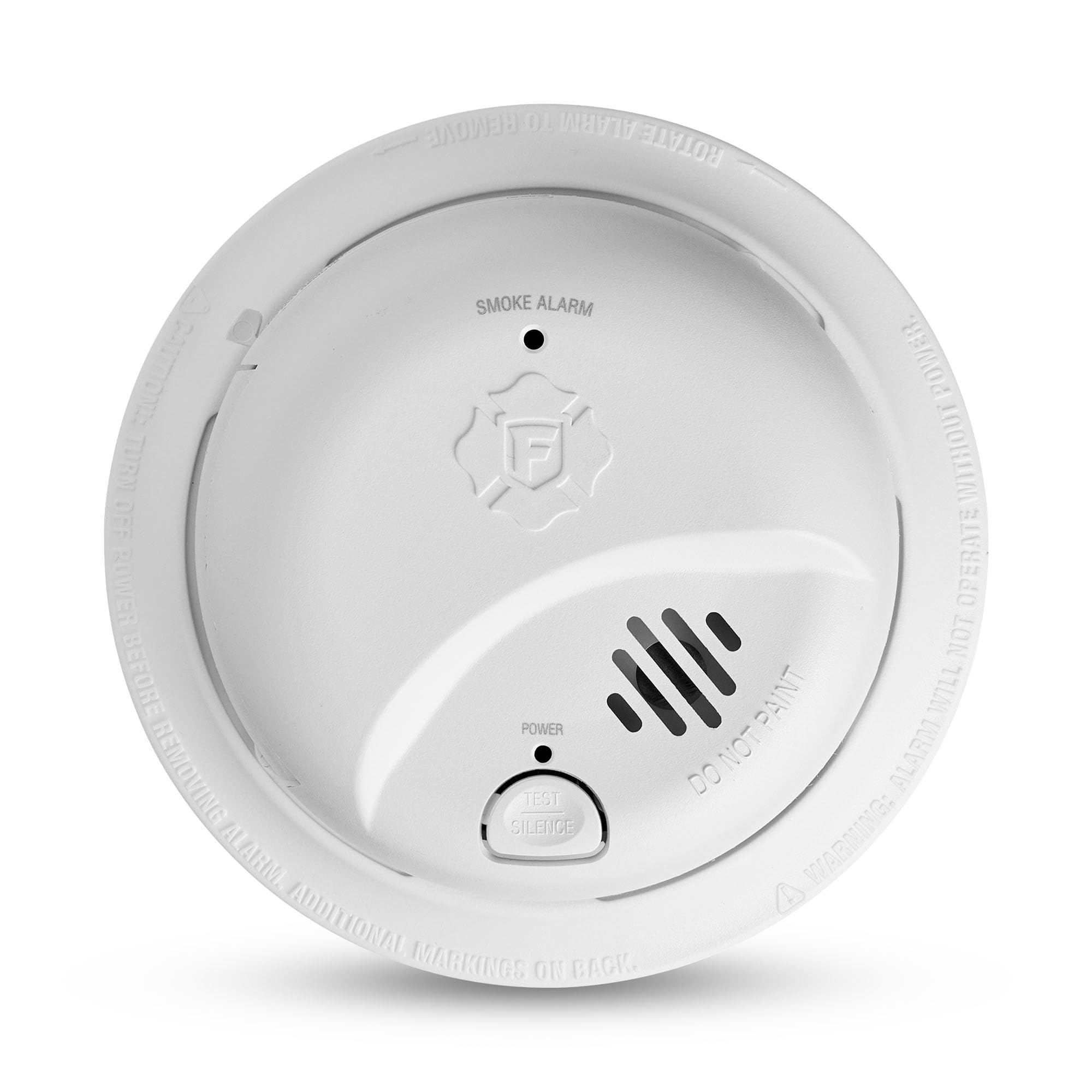
If you need a straightforward replacement for an existing hardwired detector, the First Alert SMI100-AC is built for exactly that job. This review covers what this smoke alarm does, how it installs, and where it might not be the right fit for your home. By the end, you will know whether this is the unit to buy or whether you should keep looking.
The short answer
The First Alert SMI100-AC earns its place as our pick for homeowners who want a dependable, no-frills hardwired smoke detector without paying for smart features they will never use. It connects directly to your home’s wiring, keeps working during a power outage thanks to its 9V battery backup, and comes from a brand that has built its reputation on fire safety. With over 7,000 units bought in the past month, it is clearly a popular choice for people replacing aging detectors or finishing a new build.
That said, this is not a detector for everyone. If you want voice alerts, smartphone notifications, or interconnected units that all sound together when one detects smoke, this model will leave you wanting more. It is a single-station alarm, meaning it only sounds where the smoke is detected. For many homes, that is perfectly adequate, but larger houses with multiple levels may benefit from a system that talks to itself.
Key features and specifications
The product name tells you most of what you need to know, but let us break down what each part means for your installation.
| Attribute | Detail |
|---|---|
| Product type | Hardwired smoke alarm |
| Model | SMI100-AC |
| Power source | Home electrical wiring with 9V battery backup |
| Backup power | 9V battery (ensures operation during outages) |
| Installation | Hardwired connection to existing ceiling wiring |
| Sensor type | Ionization sensor (fast response to fast-flaming fires) |
| Intended use | Single-station residential smoke detection |
| Brand heritage | First Alert, a recognized name in home safety |
The ionization sensor inside this unit is designed to catch fast-flaming fires quickly — the kind that spread rapidly once they take hold. That makes it a solid choice for general living areas and hallways where a quick response to open flames matters most. It is not, however, the ideal sensor type for smoldering fires, which produce thick smoke before flames appear. Those slow-burning fires are better caught by photoelectric sensors, and many modern homes use both types in different locations.
The 9V battery backup is a critical feature. Hardwired alarms are only as reliable as your home’s electrical supply, and if a fire knocks out power — which happens more often than you might think — the battery keeps the alarm sounding. First Alert includes this backup on the SMI100-AC as standard, which is exactly what you want from a safety device.
Installation: A straightforward swap for most homeowners
If you are replacing an existing hardwired alarm, this is about as simple as it gets. The mounting bracket attaches to your ceiling box, you connect the wires using wire nuts, and you snap the unit into place. The wiring colors are standard — black to black, white to white — and the included connector makes the process approachable even if you are not an electrician.
That said, we have to be honest about the caveats. Working with live electrical wiring carries inherent risk, and if you are not comfortable turning off the breaker and verifying the power is dead before you start, this is a job for a professional. The unit is designed for retrofit installations, which means it should line up with the mounting holes left by most older detectors, but there is no universal guarantee that your existing bracket will match without some adjustment.
The 9V battery is a straightforward insert — it clicks into the compartment and the alarm will chirp to confirm it has power. We recommend replacing that battery at least once a year, or whenever you change your clocks in the spring and fall. A low battery chirp is annoying, but it is far better than a silent alarm.
How loud is it, and will it wake you up?
Smoke alarms are only useful if you actually hear them. The SMI100-AC produces a tone that is designed to cut through ambient household noise, and in a typical bedroom with the door closed, it should be audible from a hallway installation. The alarm pattern is the standard three-beep cycle that most people recognize, which helps everyone in the house understand what the sound means even in a groggy, middle-of-the-night moment.
The honest limitation here is that a single unit has a finite range. If you install this in a basement and a fire starts on the top floor, you may not hear it clearly enough to react in time. This is why we recommend pairing this alarm with additional units on every level of your home, and ideally in or near every sleeping area. The SMI100-AC does not interconnect with other alarms, so each unit operates independently.
For most single-level homes or apartments, one well-placed unit per floor is a reasonable baseline. For multi-story houses, you will want to budget for several of these units placed strategically, and you should still consider whether an interconnected system is worth the extra cost for your peace of mind.
What it does not do: The trade-offs you need to know
Every product has limits, and the SMI100-AC’s are worth spelling out before you buy. This is a dedicated smoke alarm — it does not detect carbon monoxide. If you need CO protection, you will need a separate unit or a combination alarm that does both jobs. Many families choose to put a combination unit near bedrooms and a smoke-only unit in other areas, which is a sensible approach.
The lack of smart connectivity is another consideration. There is no app, no phone notification, and no way to silence the alarm remotely. If you are away from home and an alarm sounds, you will not know about it until you return. For some homeowners, that is a dealbreaker in an era where everything else in the house connects to Wi-Fi. For others, it is a welcome simplicity — no firmware updates, no network troubleshooting, just a device that does one thing reliably.
This unit also does not have a hush or silence button, which means the only way to stop a nuisance alarm from cooking smoke or steam is to remove the unit or disconnect power. That is a notable inconvenience in a kitchen-adjacent location. Many competing alarms in a similar price range include a test/silence button that lets you temporarily quiet a false alarm without disabling the unit entirely.
Pros and cons
| Pros | Cons |
|---|---|
| Reliable hardwired operation with battery backup | No carbon monoxide detection |
| Simple retrofit installation for most homes | Does not interconnect with other alarms |
| Trusted First Alert brand name | No smart features or phone alerts |
| Affordable price point for budget-conscious buyers | No silence button for nuisance alarms |
| Ionization sensor responds quickly to fast-flaming fires | Less effective for smoldering fires compared to photoelectric sensors |
The affordability of this unit is a genuine strength. When you are outfitting a home with multiple detectors, the cost per unit adds up quickly, and the SMI100-AC keeps that expense manageable. The trade-off is that you are getting a functional, dependable alarm without any of the convenience features that you might find on more expensive models.
Maintenance and lifespan: What to expect over time
Smoke alarms are not lifetime devices. The industry standard recommendation is to replace your detectors every ten years, and this unit is no exception. The sensor components degrade over time, and an old alarm is less reliable than a new one, even if it still passes its test button. If you are replacing a unit that is approaching a decade of service, you are making the right call.
The test button on the SMI100-AC lets you verify that the alarm is functioning, and we recommend testing it monthly. It takes two seconds — press and hold the button until the alarm sounds, then release. If the alarm does not sound, replace the battery first and test again. If it still fails, replace the entire unit.
Cleaning is also part of the maintenance picture. Dust and debris can accumulate inside the sensor chamber over time, which can cause false alarms or reduce sensitivity. A gentle vacuum around the vents every few months keeps it clear. Avoid using cleaning sprays near the unit, as the chemicals can interfere with the sensor.
Where it belongs in your home
The placement of a smoke alarm matters as much as the alarm itself. The SMI100-AC is best suited for hallways outside bedrooms, living rooms, and other general living areas where fast-flaming fires are most likely to be detected quickly. It should be mounted on the ceiling, at least a few inches away from walls and corners where air circulation is poor.
We would not recommend this unit for kitchens or bathrooms. The ionization sensor is prone to nuisance alarms from cooking smoke and steam, and without a silence button, those false alarms become a real annoyance. If you need protection in those areas, consider a photoelectric model or a heat detector instead.
For a home with a single level, one unit in the central hallway is the minimum. For multi-level homes, install one on each floor, and consider adding units near sleeping areas for the fastest possible warning. Remember that this unit does not interconnect, so each one operates independently — you will need to test each one separately.
Questions buyers ask
Is the First Alert SMI100-AC hardwired or battery operated?
It is primarily hardwired to your home’s electrical system, but it includes a 9V battery backup so it continues to function during a power outage. You will need to connect it to existing ceiling wiring, and the battery is a secondary power source, not the primary one.
Does this alarm detect carbon monoxide?
No. The SMI100-AC is a smoke alarm only. It does not sense carbon monoxide, so if you need CO protection, you will need a separate detector or a combination smoke and CO alarm.
Can I connect multiple SMI100-AC units together?
No, this model does not support interconnection. Each unit operates independently, meaning only the unit that detects smoke will sound. If you want all alarms to sound simultaneously, you need a system designed for interconnection.
How do I replace an old hardwired alarm with this one?
Turn off power at the breaker, remove the old unit from its mounting bracket, disconnect the wires, and connect the new unit using the included wiring connector. Mount the new bracket if needed, attach the unit, and restore power. If you are not comfortable working with wiring, hire a professional.
How often should I test the alarm?
We recommend testing once a month by pressing and holding the test button until the alarm sounds. This confirms the sensor and the battery backup are both functioning properly.
How long does the 9V battery last?
Battery life varies, but a standard 9V alkaline battery typically lasts about a year in this type of alarm. Replace it annually, or whenever the low-battery chirp begins, to ensure continuous protection.
Will this alarm fit where my old one was mounted?
The mounting bracket is designed to fit standard ceiling junction boxes, which are common in most homes. However, if your old alarm used a different bracket pattern, you may need to do minor adjustments or install the new bracket over the existing holes.
Does this alarm work during a power outage?
Yes, that is the purpose of the 9V battery backup. When the power goes out, the alarm switches to battery power and continues to detect smoke. The battery does not power the unit during normal operation — it is strictly a backup.
Is this alarm suitable for a kitchen or bathroom?
We would advise against it. The ionization sensor is sensitive to cooking smoke and steam, and without a silence button, you cannot easily quiet nuisance alarms. Place it in hallways, living areas, and bedrooms instead.
What is the expected lifespan of this smoke alarm?
Plan to replace the entire unit about ten years after installation. Sensor components degrade over time, and an aging alarm may not respond as quickly. If you do not know how old your current alarm is, replace it now and mark your calendar.
Check the current price and availability of the First Alert SMI100-AC on Amazon