Affiliate advertising disclosure. GreenArmorSystem (greenarmorsystem.it.com) is a participant in the Amazon Services LLC Associates Program, an affiliate advertising program designed to provide a means for sites to earn advertising fees by advertising and linking to Amazon.com. We earn an advertising fee on qualifying purchases made through the links on this page, and the reader's price is unaffected. Full disclosure
Best Temperature Alarm for a Holiday Home
Owning a holiday home means leaving it empty for weeks, sometimes months. You need a reliable temperature alarm to catch freezing pipes, failing AC units, or sudden humidity spikes before they become costly repairs. We have compared five top-rated units to find the best temperature alarm for a holiday home, whether you need a simple plug-in display or remote alerts sent straight to your phone. Each pick below suits a specific need, so read the short guide after our overview to match the right device to your property.
We have picked the DreamSky Weather Station as our top overall choice for its large, easy-to-read display and atomic clock accuracy, making it perfect for checking conditions at a glance. For remote access while you are away, we recommend the YoLink Smart Wireless Thermometer Hygrometer 3-Pack, which sends text and email alerts. Budget-conscious owners should consider the Govee Indoor Hygrometer Thermometer H5075 for a low-cost, app-connected option.
The short answer
For most holiday homeowners, the DreamSky Weather Station offers the best balance of visibility, reliability, and value. Its self-setting atomic clock and large indoor/outdoor display mean anyone entering the property can instantly see if conditions are safe. If you are usually far from the property and want proactive alerts, the YoLink Smart Wireless Thermometer Hygrometer is a sensible upgrade, offering long battery life and a hub for reliable connectivity. Both units will pay for themselves the first time they prevent a burst pipe or a ruined wine collection.
DreamSky Weather Station Indoor Outdoor Thermometer Wireless


The DreamSky is a plug-in weather station that pairs an indoor sensor with a wireless outdoor sensor, so you can monitor the temperature both inside the cabin and on the porch or in a shed. The digital display is genuinely large, which helps when you walk in after a long drive and just want to see if the heating has held up. It also includes a backlight dimmer, so it will not glare across the room at night, and a USB port that is handy for charging a phone or running a small device. The atomic clock sets itself, meaning you never have to fiddle with time changes when you arrive for the weekend.
This unit suits owners who want a straightforward, visible monitor without relying on a smartphone app. It is our pick for a primary residence or a cabin you visit often, as the display gives instant peace of mind. Because it is plug-in, it needs to stay connected to power, so it will not help during an outage unless you have a backup plan. Also, the wireless outdoor sensor has a limited range, so place it within a reasonable distance of the main unit for an accurate reading.
YoLink Smart Wireless Thermometer Hygrometer 3-Pack
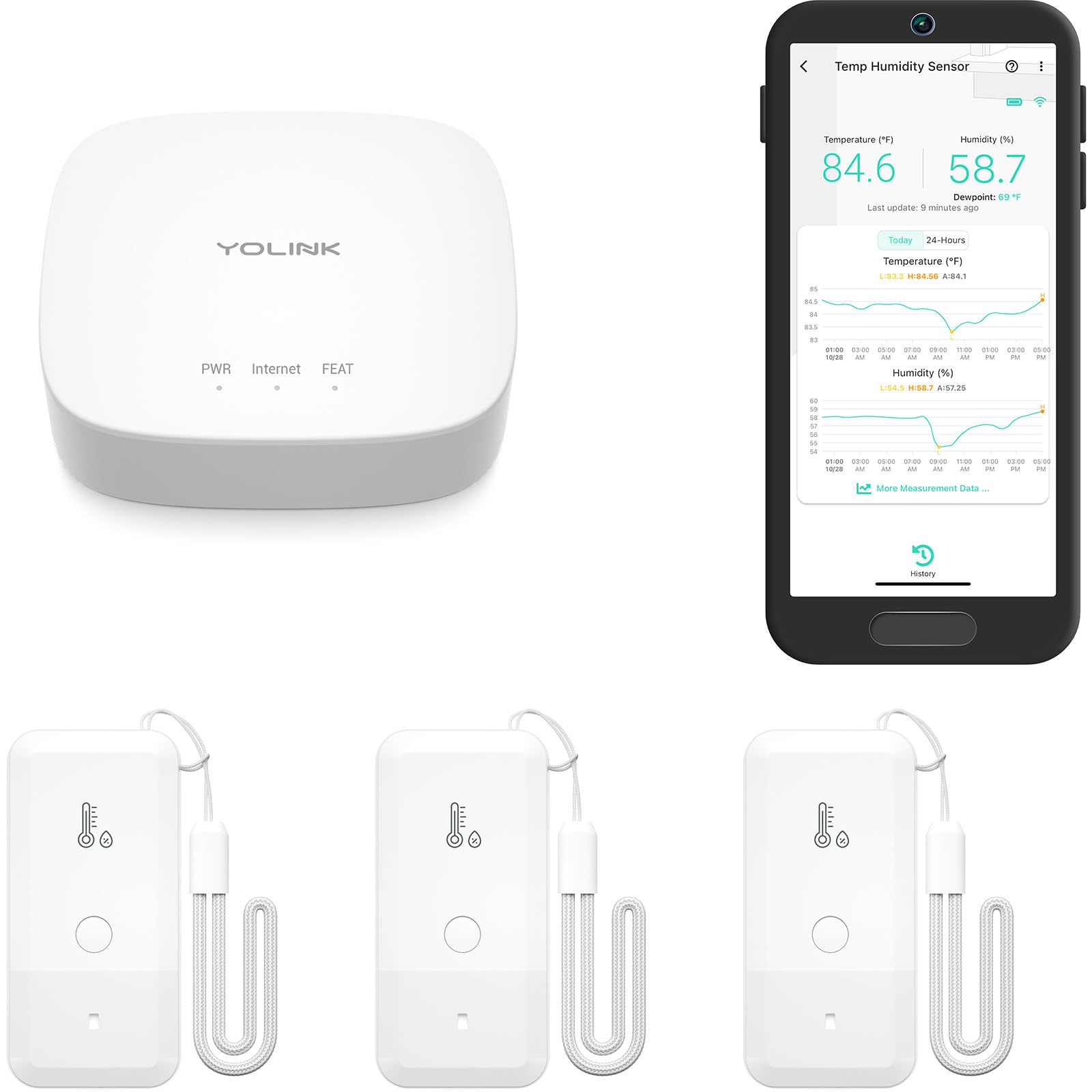
The YoLink system is built for remote monitoring, with a hub included that connects the sensors to your home Wi-Fi network. Each of the three sensors covers a wide temperature range, making them suitable for a freezer, a fridge, a greenhouse, or even a pet cage in a separate building. The standout feature is its alerting capability: you can receive app alerts, emails, and text or SMS messages when the temperature falls outside your set limits. Battery life is rated at five years, which means you are not climbing a ladder to change batteries every few months.
This is our pick for owners who divide their time between properties and want real-time notifications without checking an app constantly. The ability to monitor three separate locations with one hub is a strong advantage for a holiday home with a garage, a workshop, or an outbuilding. The main consideration is that the system depends on both the hub and your home Wi-Fi, so a weak router signal at a remote property could cause gaps in coverage. Also, the 3-pack format is more of an upfront investment than a single unit, though the cost is reasonable for the coverage you get.
GoveeLife 2.0 WiFi Hygrometer Thermometer with Gateway
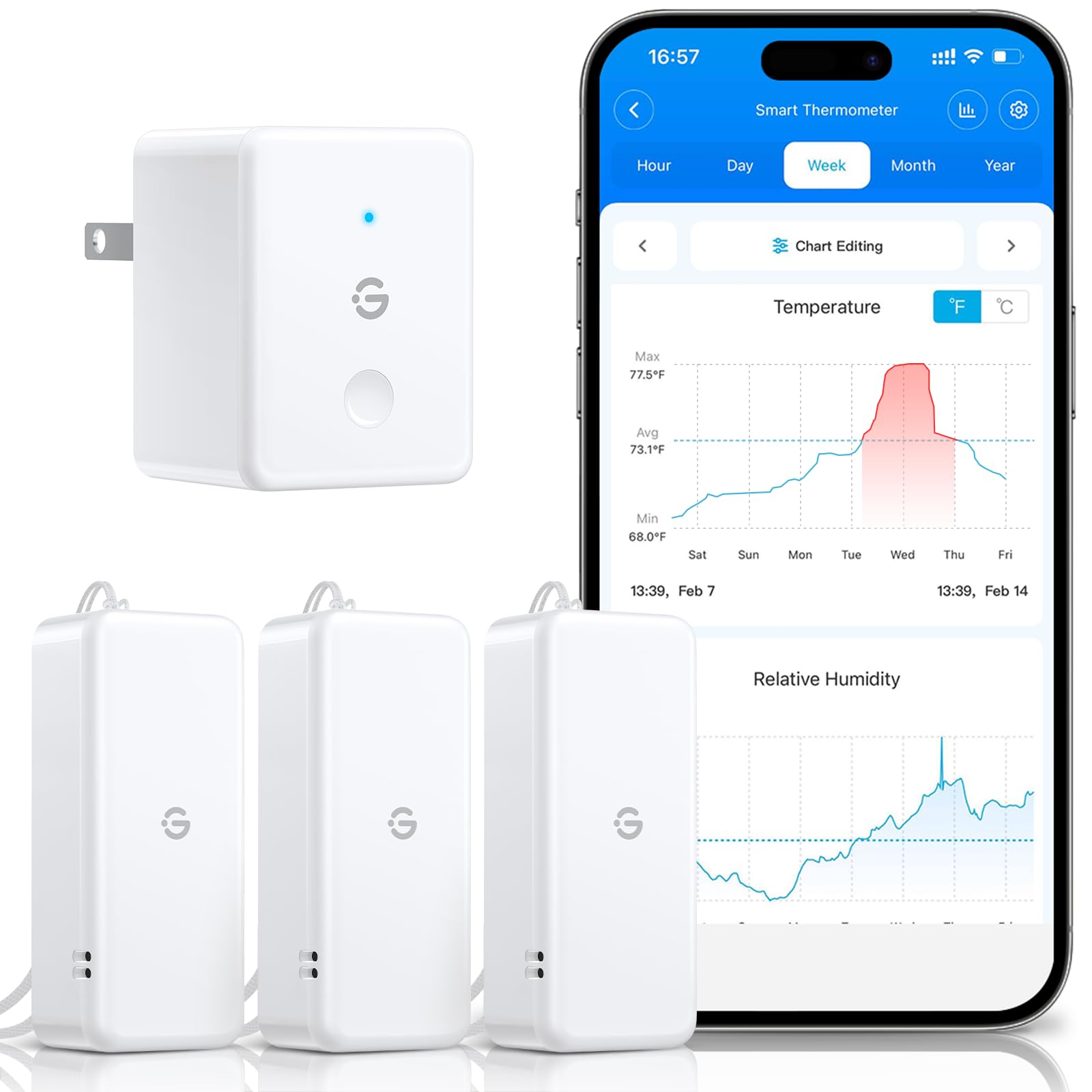
The GoveeLife system uses a compact gateway to connect three mini sensors to your home network, giving you a full picture of temperature and humidity in different rooms. The sensors are small enough to place discreetly on a shelf in a wine cellar, a bedroom, or a basement without being an eyesore. The accompanying app provides alerts when readings go out of your preferred range, and it stores two years of data and battery history so you can spot trends over time. The system is designed for indoor use, which covers most holiday home scenarios, from a damp basement to a stuffy attic room.
This system suits owners who want to track conditions across multiple rooms and appreciate a clean, app-driven interface. We like that it keeps a long history, so you can see if a space is slowly getting more humid even when the temperature stays stable. Note that it operates on 2.4G Wi-Fi only, which is common for smart home devices but worth confirming your router supports it. Also, because the sensors are battery-powered and the gateway needs power, you should ensure the gateway is in a spot with a reliable outlet and a strong signal.
Govee WiFi Thermometer Hygrometer H5103 with Electronic Ink Display
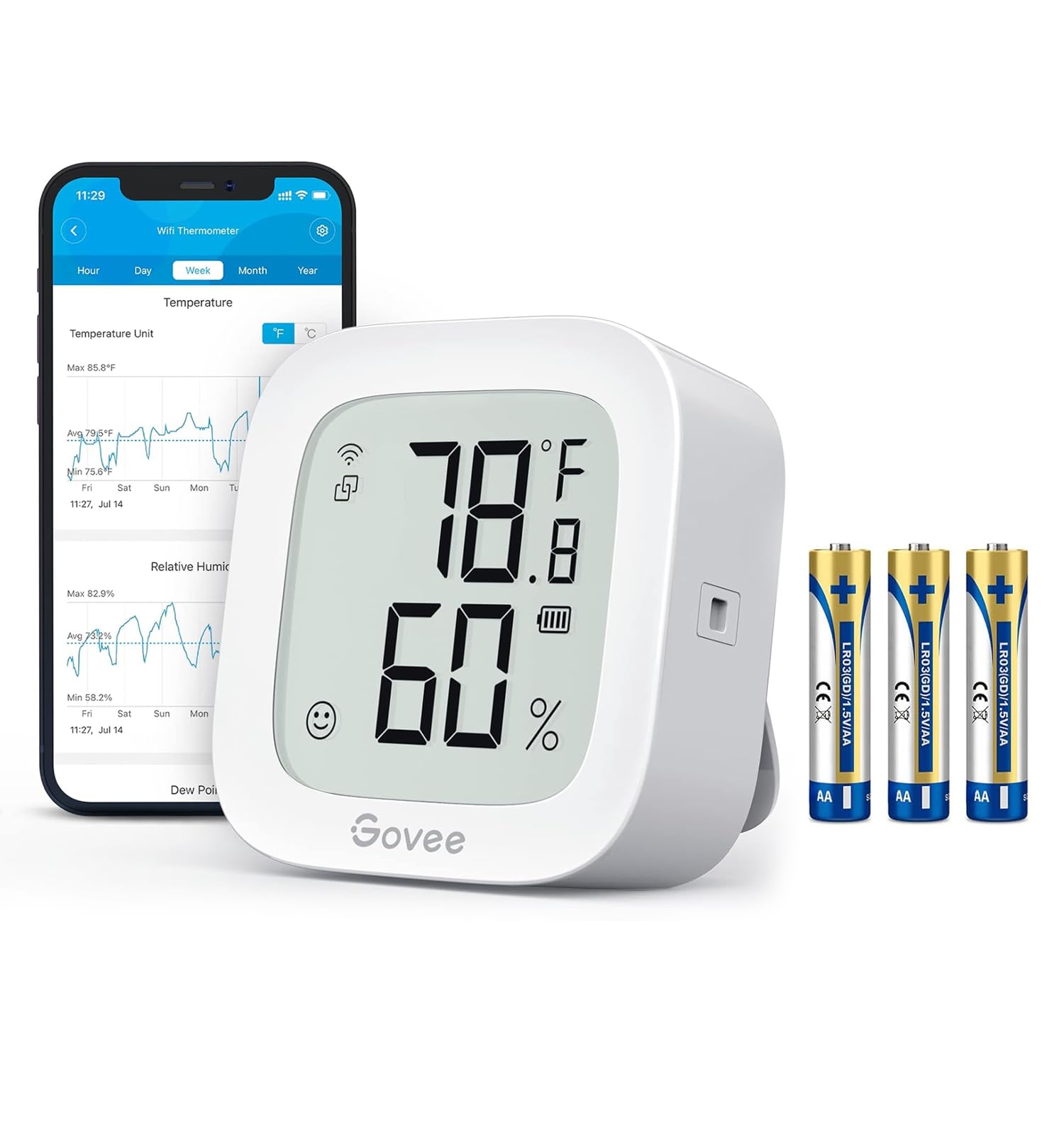
The Govee H5103 stands out for its electronic ink display, which is exceptionally easy to read from across the room and sips power so the battery lasts a long time. It connects to your home network over both 2.4G Wi-Fi and Bluetooth, giving you a flexible connection that works whether you are standing next to it or checking from your phone in another state. The app sends alerts when the temperature or humidity crosses your threshold, and it supports two years of data export for keeping records. This is a solid choice for monitoring a bedroom, a wine cellar, or a basement where you want a visible readout and remote alerts.
We recommend this unit for owners who want a dependable, single-room monitor with a screen they can actually read without pulling out a phone. The electronic ink display is a nice touch that sets it apart from other units that use standard LCD screens. On the downside, this is a single-sensor device, so if you have multiple rooms to watch, you will need to buy additional units. It also relies on your home Wi-Fi for remote alerts, so a solid internet connection at the property is essential for it to be a true remote alarm.
Govee Indoor Hygrometer Thermometer H5075 with Bluetooth App Control

The Govee H5075 is the budget-friendly entry point into smart temperature monitoring, offering Bluetooth app control and a 164-foot remote monitoring range from your phone. It tracks both temperature and humidity, and the app sends smart alerts when conditions drift outside your set range. The device stores up to two years of data that you can export, which is helpful for keeping a log of a property’s conditions across seasons. Its compact size means it fits on a nightstand, a wine rack, or a shelf without taking up much space.
This pick is ideal for owners who want a low-cost way to keep an eye on a single room and are usually within Bluetooth range of the property, such as a nearby guesthouse or a cabin on the same land. It is also a good starter device to see if remote monitoring is worth the investment before moving to a Wi-Fi system. The key limitation is that Bluetooth requires you to be relatively close to the sensor; you cannot check it from a different city without a separate gateway or hub. For true long-distance alerts, you will want to step up to one of our Wi-Fi-connected picks above.
Buying guide
- Connectivity: Decide whether you need Wi-Fi alerts while away from the property or if a local display is enough. Bluetooth units only work when you are close by.
- Number of sensors: A multi-pack or a hub system lets you monitor several rooms or buildings with one app, while a single unit is fine for one critical space.
- Power source: Plug-in units are reliable but fail during power outages; battery-powered units last longer but need periodic changes.
- Alert methods: Look for units that offer app notifications, and check if they support email or text messages for the most urgent warnings.
- Display type: A large, backlit display is helpful for quick checks, while an electronic ink screen offers excellent readability and battery life.
- Data history: If you want to track seasonal patterns or resolve disputes with a property manager, choose a unit that stores and exports historical data.
- Indoor vs. outdoor use: Confirm your sensor is rated for the location, especially if you plan to monitor a freezer, a greenhouse, or an unheated shed.
Frequently Asked Questions
What temperature should I set my alarm to for a holiday home?
Set your low-temperature alarm to around 40°F to give yourself a buffer before pipes are at risk of freezing. Your high-temperature alarm depends on what you are protecting, but 85°F is a reasonable upper limit for most homes.
Can I monitor my holiday home temperature from my phone?
Yes, if you choose a Wi-Fi model like the GoveeLife or the YoLink system, you can receive alerts and check readings from anywhere with an internet connection. Bluetooth-only models require you to be within range.
Do I need a separate sensor for each room?
Not necessarily, but we recommend it for critical areas like a basement, a kitchen, or a bathroom where pipes are most vulnerable. A multi-pack system makes this more affordable than buying individual units.
Will a temperature alarm work during a power outage?
Battery-powered sensors will continue to report, but plug-in base stations and Wi-Fi hubs will stop working unless they have a battery backup. Consider a battery-powered unit if outages are common in your area.
What is the difference between a thermometer and a hygrometer?
A thermometer measures temperature, while a hygrometer measures humidity. Many of our picks combine both, which is useful because high humidity can cause mold and mildew even when the temperature is fine.
How long do the batteries last in these devices?
Battery life varies widely, from a few months for some Wi-Fi sensors to up to five years for the YoLink system. Check the product name and description for the estimated lifespan before buying.
Our closing verdict
For a holiday home, the DreamSky Weather Station remains our go-to recommendation because it combines a clear, always-on display with a wireless outdoor sensor and a self-setting clock. If you need to know about problems while you are miles away, the YoLink Smart Wireless Thermometer Hygrometer 3-Pack offers the best alerting system with its text and email capabilities. Whichever you choose, a reliable alarm is a small price to pay for the peace of mind that comes with protecting your second home.