Affiliate advertising disclosure. GreenArmorSystem (greenarmorsystem.it.com) is a participant in the Amazon Services LLC Associates Program, an affiliate advertising program designed to provide a means for sites to earn advertising fees by advertising and linking to Amazon.com. We earn an advertising fee on qualifying purchases made through the links on this page, and the reader's price is unaffected. Full disclosure
X-Sense SC07 Smoke and CO Detector: Two Alarms, One Ceiling Spot
The X-Sense SC07 is a single ceiling unit that watches for both smoke and carbon monoxide, runs on a sealed battery you never swap, and shows readings on an LCD screen. It suits renters, landlords and anyone replacing two separate alarms with one footprint. In this review we walk through what the SC07 actually is, how it is built, where it earns its place and where it falls short, so you can decide quickly whether it belongs on your ceiling.
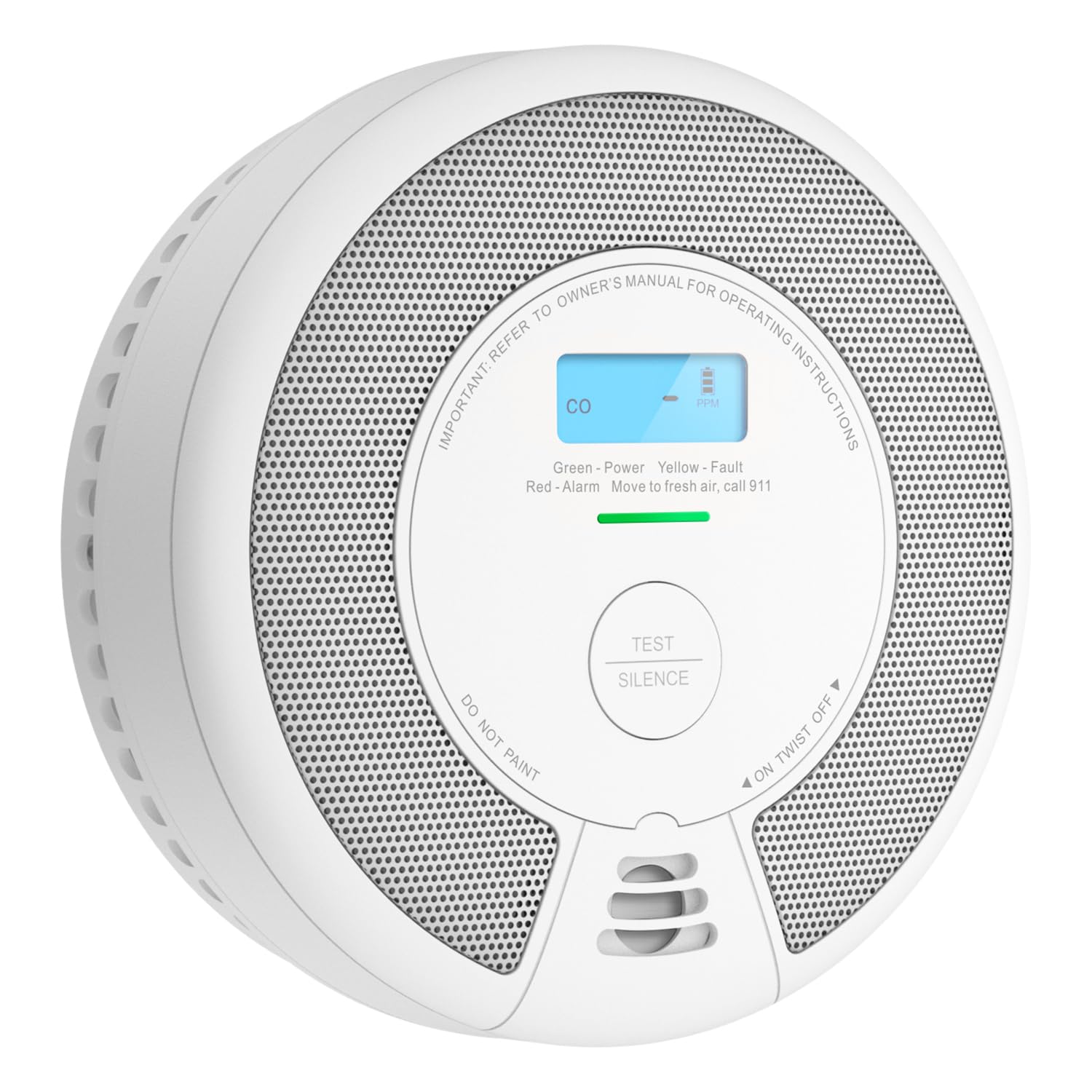
The short answer
If you want one device that covers both smoke and carbon monoxide without an electrician, the X-Sense SC07 is the straightforward pick. It is a sealed-battery combo alarm with a display, it carries the UL listings you should expect on a life-safety device, and it installs with screws or mounting hardware rather than a wiring run.
Our advice is to check the price and confirm the battery style fits your plan. The sealed cell is the whole point of this model, but it also means the unit is disposable at end of life rather than rechargeable, and that is the trade you are making. For a hallway, a bedroom ceiling or a rental unit, that trade is usually a good one.
Check the current price on Amazon
Key Features and Specifications
The product name tells you most of what matters here, so we have kept the table to the attributes it actually states. Everything else about how the SC07 behaves is covered in the sections below.
| Attribute | Detail |
|---|---|
| Model | SC07 |
| Detection type | 2-in-1 smoke and carbon monoxide |
| Power source | 10-year sealed battery |
| Wiring | Not hardwired |
| Display | LCD |
| Certifications | UL 217 and UL 2034 |
| Pack size | 1-pack |
Two rows in that table deserve a sentence each. The UL 217 listing is the standard for smoke alarms and UL 2034 is the standard for carbon monoxide alarms, so a single unit carrying both has been evaluated against the two separate safety benchmarks rather than one combined one. The "not hardwired" note is the other big one: this alarm does not need a live electrical line, which is what makes it viable for older homes, rentals and any ceiling where running cable is more trouble than it is worth.
What the 2-in-1 design actually means
A combo alarm packs two different sensors into one housing. The smoke side responds to the particles a fire throws off, and the CO side responds to carbon monoxide, an odorless gas that comes from fuel-burning appliances, blocked flues and attached garages. Putting both in one device saves you a ceiling position and a second set of batteries, and it means one alarm sounds for either hazard.
The catch is that a combo unit is only as good as its weaker sensor, and a shared housing means a fault in one function can take the whole device out of service. That is true of every combo alarm on the market, not just this one, but it is worth knowing before you replace two standalone units with a single combo.
The sealed 10-year battery
The battery is sealed inside the housing and is rated to last the life of the alarm. You do not open a compartment, you do not buy replacements, and you do not get the middle-of-the-night chirp that comes from a dying cell you forgot to change. When the ten years are up, the whole unit is replaced.
That is a genuine convenience for landlords and for anyone who has ever stood on a step stool at 2 a.m. trying to remember which alarm is beeping. It also means the SC07 is a fixed-life product: there is no servicing it, no refreshing the cell, and no second act after the battery reaches its end. We think that is a fair trade at this price point, but you should go in knowing it.
The LCD display
The LCD is the feature that separates the SC07 from the plain combo alarms in the same bracket. It gives you a readout on the unit itself, which is useful when you want to confirm the alarm is powered and monitoring rather than guessing from a silent ceiling.
A display also makes the CO side more legible. Carbon monoxide is invisible and symptomless until it is dangerous, so having a screen that shows the unit is active and reporting is a small but real comfort. We would not buy a combo alarm for the screen alone, but once you have had one, going back to a blank faceplate feels like a downgrade.
Will it fit a small hallway or bedroom ceiling?
Yes, and that is one of the SC07’s better arguments. A combo alarm occupies a single mounting position, so in a narrow hallway or a small bedroom where you would otherwise be juggling a smoke alarm and a separate CO unit, you get both jobs done with one footprint and one set of screws.
The sealed battery helps here too. Without a hardwired line, you are not tied to a junction box, so the alarm can go where the ceiling actually is rather than where the wiring happens to be. In a rental, that is the difference between installing a proper alarm and settling for a plug-in unit on a shelf.
The trade-off is coverage. One combo alarm covers one area, and a whole home needs more than one. If you are buying for a house, plan on several units or on pairing this with additional alarms rather than treating a single SC07 as a complete system.
How long will it last, and what happens at the end?
The sealed battery is rated for ten years, and the alarm is designed to be replaced as a unit when that period ends rather than serviced. That is a decade of coverage with no battery purchases, which is a long time in alarm terms and compares well with the annual or biannual cell swaps a conventional unit demands.
The other side of that coin is that the SC07 has no second life. You cannot open it, refresh the cell or extend it, and the whole device goes in the bin at end of life. For a life-safety product that is arguably the right design, since a sealed unit cannot be accidentally left without power, but it does mean the cost is a ten-year cost rather than an upfront one.
We would also point out that the ten-year figure is a rating, not a guarantee, and that all alarms should be checked periodically regardless of how they are powered. A sealed battery removes the most common failure mode, not every failure mode.
Is it easy to install without an electrician?
This is where the "not hardwired" design pays off. Because the SC07 does not need a live line, installation is a mounting job rather than an electrical one, which puts it within reach of most homeowners and renters without calling anyone in.
That said, "no wiring" is not the same as "no thought". You still need to pick a position that follows the usual alarm placement guidance, keep it clear of dead air corners and away from the kitchen’s normal cooking plume, and make sure the mounting is secure on the ceiling or wall you have chosen. The unit is a life-safety device, so we would rather you spend ten minutes on placement than ten seconds on the drill.
For a landlord fitting out several units, the sealed battery and the wiring-free install together mean the SC07 can be deployed without an electrician’s visit per property. That is a real operational advantage, and it is probably the single strongest reason this model exists.
How does it compare with separate alarms?
Two standalone alarms, one smoke and one CO, will usually cost less in total than a combo unit, and if one fails you replace only that one. That is the honest case for keeping them separate, and it is worth weighing if budget is the deciding factor.
What the combo buys you is simplicity: one position, one install, one battery, one thing to check. In a small flat or a single hallway, that simplicity is worth more than the saving, because the failure mode of separate alarms is that people skip the second one. A combo alarm makes the complete job the easy job.
The SC07 also wins on the display and the sealed battery, which most budget standalone alarms do not offer. So the comparison is not really combo versus separate at equal features; it is a fully equipped combo against two plainer units, and that changes the maths.
Pros and cons
| Pros | Cons |
|---|---|
| Covers smoke and CO in one ceiling position | Costs more than two basic standalone alarms |
| Sealed 10-year battery means no cell swaps | Whole unit is replaced at end of battery life |
| No hardwiring, so install is a mounting job | Still needs correct placement to work well |
| LCD shows the unit is powered and monitoring | One unit covers one area, not a whole home |
| Carries both UL 217 and UL 2034 listings | No serviceable parts if a sensor faults |
Questions Buyers Ask
Does the X-Sense SC07 need to be hardwired?
No. The SC07 is explicitly a not-hardwired unit, so it runs entirely on its sealed battery and does not need a live electrical line. That is what makes it suitable for rentals, older homes and ceilings without a junction box.
Do I have to change the battery every year?
No. The battery is sealed and rated for ten years, so there is no annual swap and no replacement cell to buy. When the ten years are up, the alarm is replaced as a unit.
Does it detect both smoke and carbon monoxide?
Yes. The SC07 is a 2-in-1 combo alarm, so a single device watches for smoke and for carbon monoxide and sounds for either hazard. That is the core reason to buy it over a plain smoke alarm.
What do the UL 217 and UL 2034 certifications mean?
UL 217 is the safety standard for smoke alarms and UL 2034 is the standard for carbon monoxide alarms. A unit carrying both has been evaluated against the two separate benchmarks, which is what you want on a combo device.
Can I use it in a rental property?
Yes, and the wiring-free install and sealed battery make it a practical choice for rentals. You avoid an electrician’s visit, and you avoid the tenant-removes-the-battery problem that plagues conventional alarms.
Where should I mount it?
Follow the usual placement guidance for smoke and CO alarms: on the ceiling or high on a wall, clear of dead air corners, and away from the immediate cooking zone. The unit does not need wiring, so you can place it where the ceiling actually is.
Will one unit cover my whole house?
No. One SC07 covers one area, so a whole home needs several alarms. Treat a single unit as coverage for one hallway, bedroom or landing, and plan additional units for the rest of the property.
Does the LCD display show carbon monoxide levels?
The SC07 has an LCD display that gives you a readout on the unit itself, which is useful for confirming the alarm is powered and monitoring. We would not rely on the screen as a substitute for the alarm sounding, which remains the primary warning.
What happens when the ten-year battery runs out?
The alarm is replaced as a whole unit. There is no battery compartment to open and no cell to swap, so end of battery life means end of the device, which is the trade you make for never having to change a battery.
Is it worth the price over a basic smoke alarm?
If you need CO coverage anyway, yes. A combo unit saves a ceiling position and a second install, and the sealed battery and display are features basic alarms usually lack. If you only need smoke detection and budget is tight, a plain alarm will do the job for less.