Affiliate advertising disclosure. GreenArmorSystem (greenarmorsystem.it.com) is a participant in the Amazon Services LLC Associates Program, an affiliate advertising program designed to provide a means for sites to earn advertising fees by advertising and linking to Amazon.com. We earn an advertising fee on qualifying purchases made through the links on this page, and the reader's price is unaffected. Full disclosure
Best Ten Year Sealed Battery Alarms for Worry-Free Whole-Home Protection
Ten-year sealed battery alarms end the twice-a-year battery swap and the low-battery chirp at 3 a.m. This guide covers five picks for three kinds of buyers: renters who want a no-wire install, homeowners replacing a hardwired system, and anyone who just needs a fresh battery for an existing alarm. We name every pick in the intro below, then walk through each one so you can decide fast.
Our top overall pick is the First Alert 10-Year Battery Combination Smoke & Carbon Monoxide Alarm, a single unit that covers both threats with no wiring at all. Renters and budget-conscious buyers should look at the X-Sense 3-pack, while anyone replacing an existing wired system has two First Alert hardwired options and a six-pack to choose from. If your alarm is fine and only the battery is dead, the ULTRA LIFE U9VL-X is the simple fix.
The short answer
The First Alert 10-Year Battery Combination Smoke & Carbon Monoxide Alarm is the pick for most households. It covers two hazards in one unit, needs no wiring, and the sealed battery means you will not be hunting for a 9-volt every year. For a single install point in a hallway or bedroom wing, it is the simplest path to full coverage.
If you are outfitting a whole house on a budget, the X-Sense 3-pack gives you three no-wire units for less than the price of two combination alarms. If you already have hardwired alarms and just want to modernize them, go straight to the First Alert hardwired models below.
First Alert 10-Year Battery Combination Smoke & Carbon Monoxide Alarm

First Alert 10-Year Battery Combination Smoke & Carbon Monoxide Alarm
Check the current price on Amazon
This is a dual-sensor alarm that watches for both smoke and carbon monoxide, which is the main reason it earns our top spot. The sealed lithium battery is built to last the life of the unit, so there is no annual battery change and no reason to keep a pack of 9-volts in a drawer. Installation is a screw-mount to the wall or ceiling with no wiring run, which makes it a realistic option for renters and for older homes without hardwired alarm circuits. First Alert is one of the most recognizable names in residential safety gear, and this unit sits in the middle of the price range for combination alarms.
It suits anyone who wants one device to cover two hazards in a central location, and it is the easiest recommendation for a first-time alarm buyer. The caution is coverage: one combination alarm protects one area, so a full home still needs several units, and buying them individually gets expensive fast. The sealed battery also means the whole unit is replaced when the battery reaches end of life, not just the cell.
First Alert Hardwire Smoke Alarm with 10-Year Battery Backup

First Alert Hardwire Smoke Alarm with 10-Year Battery Backup
Check the current price on Amazon
This is the direct replacement for a home that already has wired alarm wiring in the ceiling. It runs on household power and falls back to a sealed 10-year battery if the circuit drops, so you get the reliability of hardwiring without the annual battery chore. The unit is a smoke-only alarm, not a combination unit, which keeps it simpler and typically cheaper than a dual-sensor model. It mounts to a standard hardwired alarm box, so for most homeowners this is a swap rather than a project.
It suits anyone replacing an aging hardwired alarm who wants to keep the existing wiring and add battery backup. The drawback is that it only detects smoke, so a home relying on this unit alone still needs separate carbon monoxide protection. It is also a poor fit for renters or anyone without existing alarm wiring, since it needs a powered circuit to work as intended.
First Alert/BRK Brands Smoke Alarm Interconnected Hardwired with 10-Year Battery SMI105-AC 6-Pack
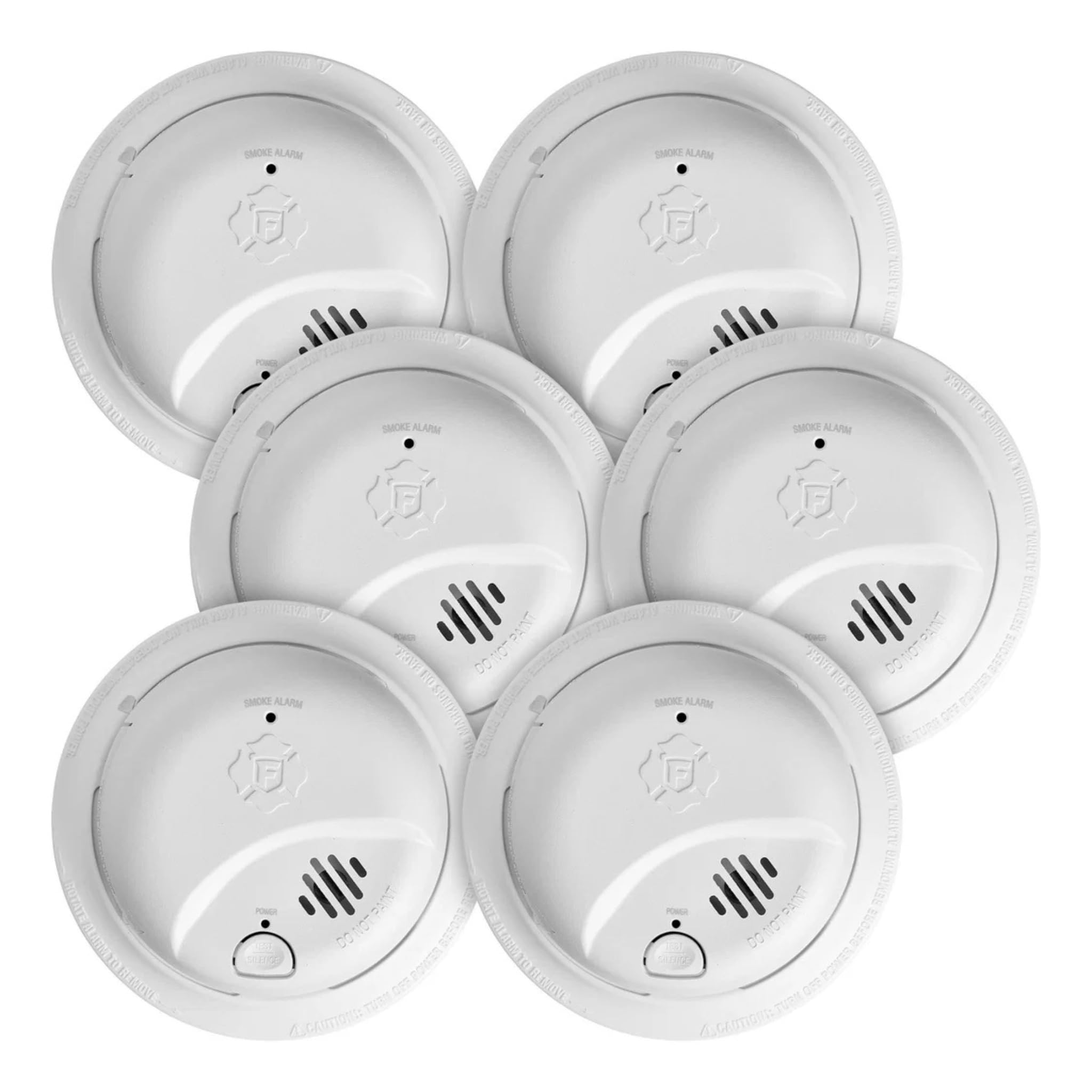
First Alert/BRK Brands Smoke Alarm Interconnected Hardwired with 10-Year Battery SMI105-AC 6-Pack
Check the current price on Amazon
This six-pack is the whole-house solution for anyone with hardwired alarm wiring already in place. The interconnected design means when one alarm sounds, they all sound, which is the setup you want in a multi-floor home where a basement alarm needs to wake someone upstairs. Each unit carries a 10-year battery backup, so a power outage does not leave the house unprotected. Buying six at once is also the practical way to replace every alarm in a home on the same schedule, rather than mixing old and new units.
It suits homeowners doing a full-system replacement or a new build, and it is the pick for anyone who wants interconnected protection without paying for separate units one at a time. The caution is that six interconnected alarms only work if the home is actually wired for them, so this is not a renter-friendly or no-wire option. It is also a significant upfront spend compared with buying one alarm at a time, even if the per-unit cost is lower.
ULTRA LIFE, 10 year, smoke alarm battery, U9VL-X

ULTRA LIFE, 10 year, smoke alarm battery, U9VL-X
Check the current price on Amazon
This is the odd one out in the list: it is a replacement battery, not an alarm. The U9VL-X is a 10-year lithium cell sized for smoke alarms that take this battery type, and it is the fix when your existing alarm is working fine but the battery has reached the end of its life. A lithium cell of this class holds up better in temperature swings than a standard alkaline, which matters in garages, attics, and unheated hallways. It is a low-cost way to keep a serviceable alarm running instead of replacing the whole unit.
It suits anyone with an alarm that accepts this battery type and still has life left in the sensor. The caution is compatibility: this battery only fits alarms designed for it, and many modern sealed-battery alarms do not have a user-replaceable cell at all. Check your alarm’s battery compartment before ordering, because the wrong cell is useless and the right one is only a stopgap if the alarm itself is near end of life.
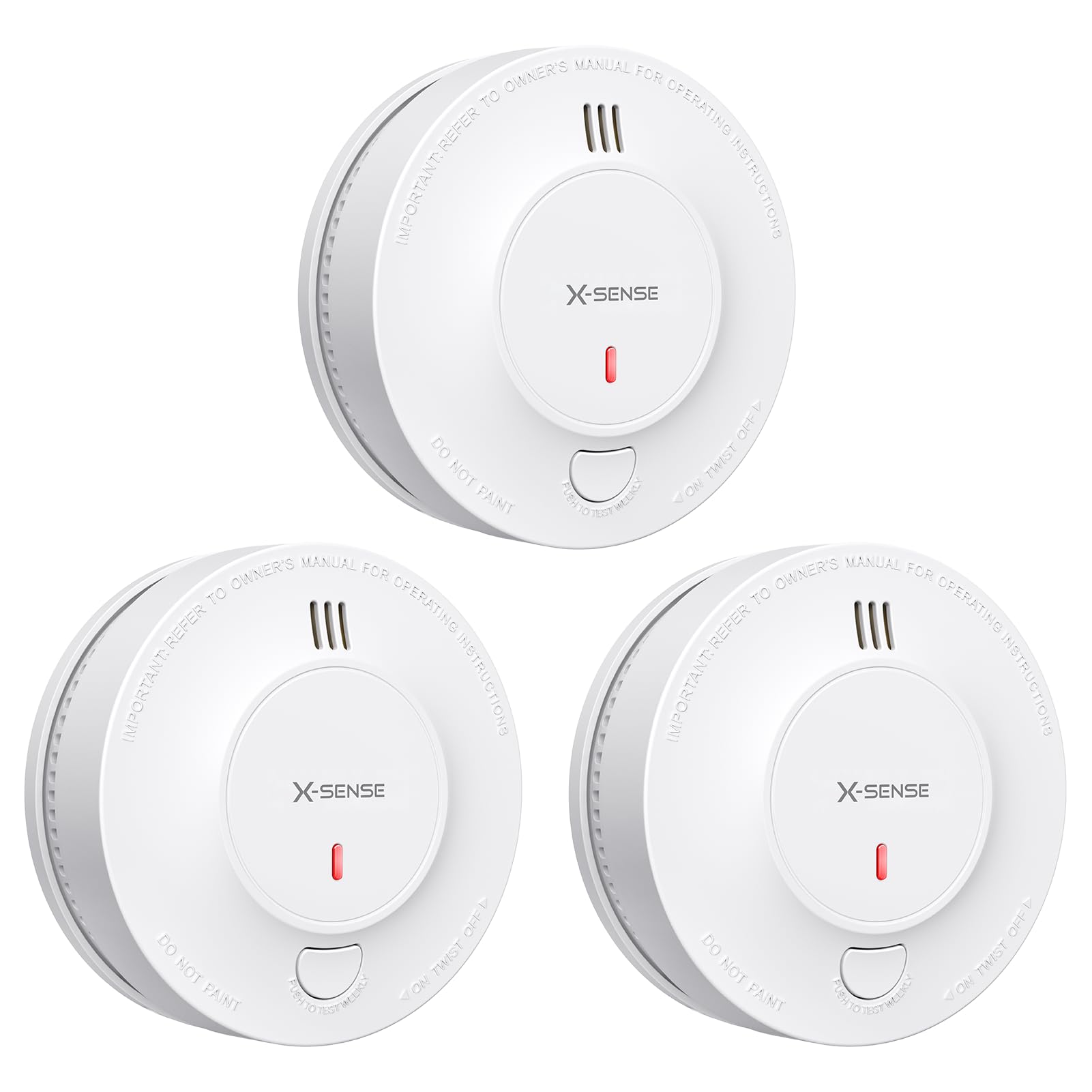
Photoelectric Smoke Alarm, Fewer Cooking Nuisance Alarms, One-Button Hush & Self-Test, Easy No-Wire Installation X-Sense Smoke Detector, 10-Year Battery, UL 217 Certified, SD2J0AX, 3-Pack
Check the current price on Amazon
This three-pack is our budget-friendly pick for a no-wire whole-home setup. The photoelectric sensor is the type that tends to be less prone to nuisance alarms from cooking smoke, and the one-button hush lets you silence a false alarm without pulling the unit down. A self-test function means you can check the alarm is working without climbing on a chair, and the sealed 10-year battery removes the annual battery change entirely. It is UL 217 certified and installs without any wiring, so it works in apartments and older homes alike.
It suits renters, first-time buyers, and anyone outfitting a home on a tight budget who still wants three alarms in place on day one. The caution is that this is a smoke-only alarm, so carbon monoxide coverage has to come from a separate unit. The three-pack also covers only three locations, which may not be enough for a larger multi-floor home.
Buying guide
- Sensor type: Photoelectric sensors tend to produce fewer nuisance alarms from cooking, while combination units add carbon monoxide detection. Match the sensor to the room and the hazards you care about.
- Power source: A sealed 10-year battery means no annual replacement, but the whole unit is retired when the battery dies. Hardwired units with battery backup need existing wiring.
- Interconnection: Interconnected alarms all sound together, which is critical in multi-floor homes. This requires hardwired units or a wireless interconnect system.
- Coverage count: One alarm protects one area. Count your bedrooms, hallways, and each level of the home before deciding between a single unit and a multi-pack.
- Certification: Look for UL 217 certification on smoke alarms, which confirms the unit meets the recognized safety standard.
- Installation method: No-wire screw-mount units suit renters and older homes, while hardwired replacements require an existing alarm circuit and are best for homeowners.
- Replacement cycle: Sealed-battery alarms are designed to be replaced as a unit at end of life, so factor the replacement cost into the purchase rather than treating it as a one-time buy.
Frequently asked questions
How long does a ten-year sealed battery alarm actually last?
The battery is rated to last the life of the unit, which is typically around ten years. After that, the whole alarm is replaced rather than just the battery.
Can I use a sealed battery alarm in a rental apartment?
Yes. No-wire models mount with screws and need no electrical work, which makes them a practical choice for renters who want reliable protection without modifying the property.
Do I still need a carbon monoxide alarm if I have smoke alarms?
Yes. Smoke alarms do not detect carbon monoxide, so a home with fuel-burning appliances or an attached garage needs separate CO protection or combination units.
What is the difference between photoelectric and ionization sensors?
Photoelectric sensors respond well to smoldering fires and tend to be less prone to cooking nuisance alarms. Ionization sensors respond faster to flaming fires. Many homes benefit from a mix.
Can I replace just the battery in my existing alarm?
Only if your alarm has a user-replaceable battery compartment. Many sealed-battery alarms do not, and those units are replaced whole when the battery reaches end of life.
How many alarms does a typical home need?
At minimum, one in each bedroom, one outside each sleeping area, and one on every level of the home. Larger homes and those with basements or attics usually need more.