Affiliate advertising disclosure. GreenArmorSystem (greenarmorsystem.it.com) is a participant in the Amazon Services LLC Associates Program, an affiliate advertising program designed to provide a means for sites to earn advertising fees by advertising and linking to Amazon.com. We earn an advertising fee on qualifying purchases made through the links on this page, and the reader's price is unaffected. Full disclosure
SITERLINK Smoke Detectors GS509A 10 Pack: Whole-Home Fire Coverage in One Box
If you are outfitting a larger home, a multi-floor rental, or a vacation property, the SITERLINK Smoke Detectors with 9V Replaceable Battery GS509A 10 Pack solves the biggest headache in fire safety: having enough working alarms in the right places. This review breaks down the photoelectric sensor technology, the battery setup, and the installation process so you can decide if this ten-pack is the right fit for your property. We will cover what makes these detectors tick, where they shine, and the honest limitations you should weigh before adding them to your cart.
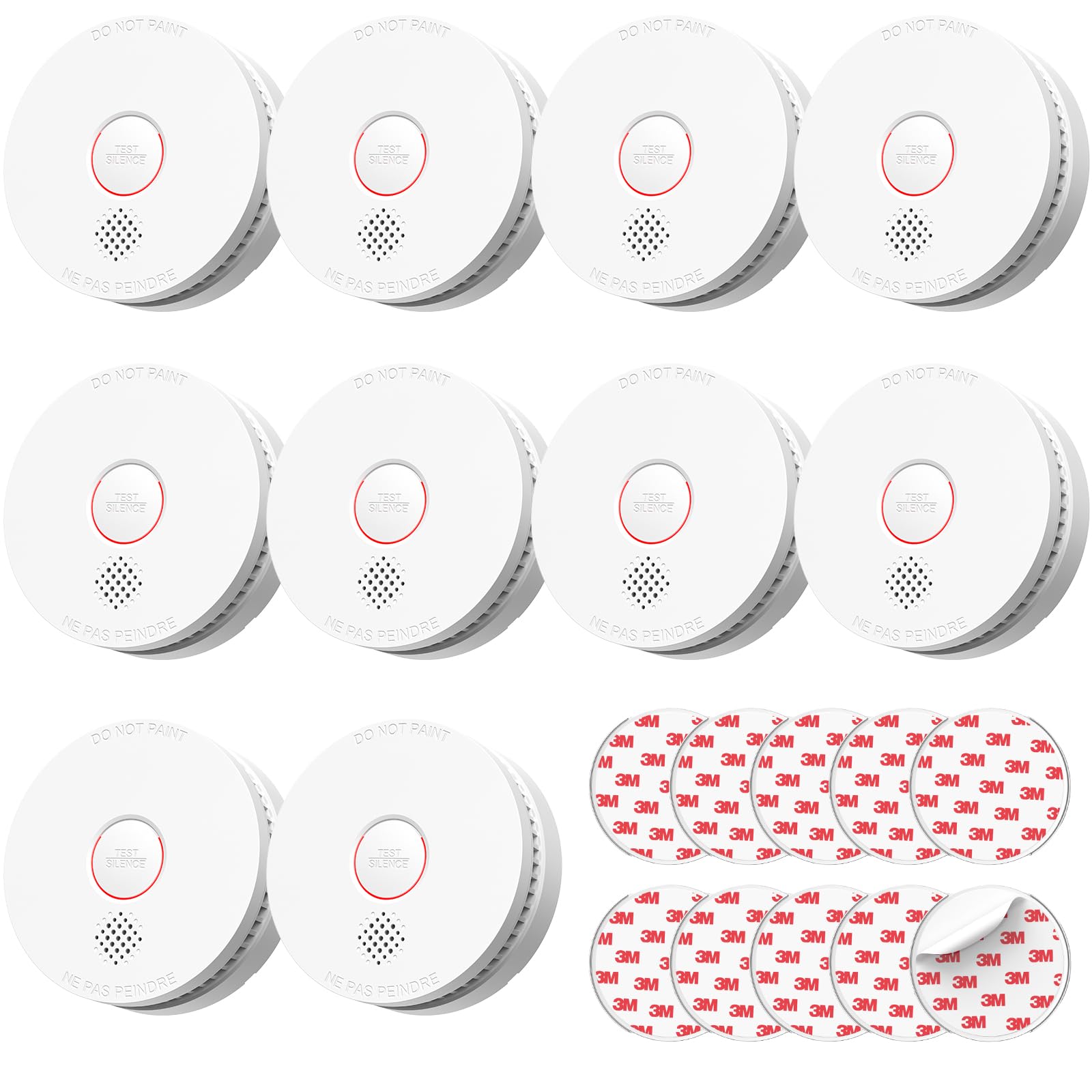
The short answer
For anyone who needs to cover multiple bedrooms, hallways, and living areas at once, the SITERLINK GS509A 10-pack is our pick for a straightforward, no-frills whole-home smoke detection setup. It delivers ten individual photoelectric alarms with replaceable 9V batteries and manual test-silence buttons, which means you can standardize every floor of your house with the same model and the same maintenance routine. The math is simple: buying in bulk costs less per unit than piecing together single detectors, and you avoid the hassle of mixing different brands with different behaviors across your ceiling.
This pack is not for everyone, though. If you live in a studio apartment or a small two-bedroom home, ten detectors is far more than you need, and you would be paying for spares you may never mount. It also lacks smart-home connectivity, so if you want phone alerts or interconnected alarms that all sound together, you will need to look at a pricier, wirelessly linked system instead.
Key Features and Specifications
The product name tells you most of what matters, but here is the breakdown of what the SITERLINK GS509A actually brings to your ceiling.
| Specification | Detail |
|---|---|
| Model | GS509A |
| Pack size | 10 detectors |
| Sensor type | Photoelectric |
| Power source | 9V replaceable battery (per unit) |
| Controls | Test-Silence button |
| Intended use | Residential fire detection for home and house |
| Mounting | Ceiling or wall mount (typical for this category) |
The photoelectric sensor is the key technical decision here. Unlike ionization alarms that respond faster to flaming, fast-burning fires, photoelectric sensors are more responsive to smoldering fires — the kind that produce thick smoke before open flames appear. That makes them well-suited for bedrooms and hallways where a fire might start quietly in a mattress, an appliance, or an electrical outlet.
Each detector runs on a 9V battery, which is the classic, dependable power source for smoke alarms. The replaceable nature means you are not tied to a sealed 10-year lithium unit; when the battery dies, you swap in a fresh one rather than replacing the entire alarm. The test-silence button serves double duty: you press it to confirm the alarm is functioning, and you press it to hush a nuisance alarm — typically from cooking smoke — without ripping the battery out.
How many detectors do you actually need?
The National Fire Protection Association recommends smoke alarms inside every bedroom, outside each sleeping area, and on every level of the home, including the basement. For a typical three-bedroom ranch with a basement, that works out to roughly five or six detectors. A two-story colonial with four bedrooms pushes that number to seven or eight. The SITERLINK GS509A 10-pack covers those scenarios with room to spare, which is exactly why this bulk format makes sense for a whole-house project.
The trade-off is that you will almost certainly have extras left over. That is not a waste — spare detectors are useful for replacing an aging unit a few years down the road, and they are handy for detached garages, workshops, or sheds that need basic fire protection. But if you are buying for a compact living space, you are paying a bulk price for quantity you will not use immediately.
Photoelectric sensing: what it catches and what it misses
The photoelectric sensor inside the GS509A works by using a light beam and a light-sensitive sensor. When smoke particles enter the sensing chamber, they scatter the light, causing it to hit the sensor and trigger the alarm. This design excels at detecting the large particles produced by smoldering fires — think a cigarette dropped on a couch, an overheated wire behind a wall, or a slow-burning electrical fault.
The flip side is that photoelectric alarms are generally slower to respond to fast-flaming fires, such as a grease fire on the stove or a rapidly spreading paper fire. These produce smaller combustion particles that ionization sensors catch more quickly. In practice, many safety experts now recommend photoelectric alarms for general residential use because smoldering fires are more common in homes and more likely to occur while occupants are asleep. For kitchen-specific protection, you would still want a heat detector or a combination unit, but for bedrooms and hallways, the photoelectric GS509A is a solid choice.
Battery life and the maintenance reality
The 9V battery is both a strength and a weakness here. The strength is simplicity: 9V batteries are cheap, universally available, and easy to swap. You do not need a special tool or an electrician to replace one. The test-silence button lets you check the alarm monthly, and when the battery runs low, the detector will emit a chirping sound to let you know it is time for a replacement.
The weakness is that a 9V-powered alarm depends entirely on you staying on top of battery changes. A hardwired detector draws from your home’s electrical system with a battery backup, so it keeps working even if you forget to swap the backup cell for a year. The GS509A has no such failsafe — if the battery is dead or missing, the detector is a plastic puck on your ceiling doing nothing. This makes it a poor fit for rental properties where tenants may not report a chirping alarm, or for vacation homes you visit only occasionally. If you want a set-and-forget solution, you would need a sealed lithium model with a ten-year lifespan instead.
Installation: what to expect when you mount them
These are battery-operated detectors, which means installation is a DIY job that requires no wiring. You typically mount the base plate to the ceiling or wall with screws and anchors, twist the detector onto the base, insert the 9V battery, and press the test button to confirm power. For a ten-pack, you can expect to spend maybe ten to fifteen minutes per unit, depending on how comfortable you are with a drill and how accessible your ceilings are.
The main installation consideration is placement. Smoke rises, so ceiling mounting is preferred. If you mount on a wall, the detector should be high up — generally within twelve inches of the ceiling. You also want to keep detectors at least ten feet away from cooking appliances to minimize nuisance alarms, and you should avoid placing them directly in front of air vents, which can blow smoke away from the sensor. The test-silence button is a real convenience during installation, since it lets you verify each unit works before you move to the next room.
The catch is that this is a ten-unit project. If you are mounting detectors on vaulted ceilings, in stairwells, or in awkward crawl spaces, the physical labor multiplies. A professional installer would charge per unit, so the DIY route is where you save money — but only if you are willing to spend the afternoon on a ladder.
Pros and Cons
| Pros | Cons |
|---|---|
| Ten detectors cover a whole home in one purchase | No smart features or phone alerts |
| Photoelectric sensor excels at smoldering fire detection | 9V battery requires regular replacement |
| Test-silence button simplifies maintenance and quiets nuisance alarms | Not ideal for small spaces that need only 2-3 units |
| Battery power means no electrician needed for installation | Photoelectric-only sensing is slower on fast-flaming fires |
| Replaceable batteries extend the life of each unit | No interconnectivity between units — one alarm does not trigger the others |
Questions Buyers Ask
How many smoke detectors come in the SITERLINK GS509A pack?
The pack contains ten individual smoke detectors, each with its own 9V battery compartment and test-silence button. This makes it a bulk purchase designed for whole-home coverage rather than a single-room solution.
Does the SITERLINK GS509A require hardwiring?
No. Each detector runs on a 9V replaceable battery, so installation is entirely wireless. You mount the base plate, insert the battery, and test the unit. There is no connection to your home’s electrical system.
What type of fire does a photoelectric sensor detect best?
Photoelectric sensors are most responsive to smoldering fires — slow-burning fires that produce thick smoke before open flames. This includes fires started by cigarettes, electrical faults, or overheated appliances. They are less responsive to fast-flaming fires than ionization sensors.
How do I silence a false alarm on the GS509A?
Press the test-silence button on the detector. This will hush the alarm for a short period, giving you time to clear the smoke from cooking or steam. If the alarm continues after the silence period, investigate for an actual fire.
How often should I test these smoke detectors?
You should press the test button on each unit at least once a month. This confirms the battery is functional and the sensor is responding correctly. Replace the 9V battery at least once a year, or sooner if the detector chirps to indicate low power.
Are these detectors interconnected?
No. Each GS509A unit operates independently. If one detector senses smoke, it will alarm on its own, but it will not trigger the other nine units. For interconnected alarms that all sound together, you would need a different, typically pricier, system.
Where should I install each detector in my home?
Install smoke detectors inside every bedroom, outside each sleeping area, and on every level of the home, including the basement. Mount them on the ceiling or high on a wall, and keep them at least ten feet away from cooking appliances to reduce nuisance alarms.
Can I use these detectors in a vacation rental or Airbnb?
Yes, but with caution. The 9V battery means the detector stops working entirely if the battery dies and no one replaces it. In a rental property, you would need to check each unit regularly or rely on guests to report chirping alarms.
What is the difference between the test button and the silence button?
They are the same button with two functions. A quick press activates the test mode, sounding the alarm briefly to confirm it works. A longer press, or a press during an active alarm, silences a nuisance alarm for a short period.
Do I need one detector in every room?
The general guidance is one inside every bedroom, one outside each sleeping area, and one on every floor. You do not need one in the kitchen or bathroom, where steam and cooking smoke can cause frequent false alarms.
How long will a 9V battery last in one of these detectors?
Battery life varies with usage, but a fresh 9V battery in a smoke detector typically lasts about one year. The detector will emit a periodic chirp when the battery is low, signaling that it is time for a replacement.
Are these detectors suitable for a large multi-story home?
Yes, a ten-pack is well-suited for a larger home. A typical four-bedroom, two-story house with a basement may need anywhere from six to eight detectors, leaving you with spares for future replacements or outbuildings.
Can these detectors be painted over or customized?
You should not paint a smoke detector. Paint can block the sensor openings and prevent smoke from entering the detection chamber, which would compromise the unit’s ability to sense a fire. Leave the detector as it comes from the manufacturer.